

In the challenging setting of industrial thermal processing, picking the proper heating elements frequently decides whether you enjoy steady production or face expensive delays. Facility engineers who manage temperatures from 1000°C to 1450°C commonly deal with ordinary metallic alloy heaters. These metal parts often face structural drooping, fast oxidation, and "grain growth," which result in erratic breakdowns and repeated furnace upkeep. For brand owners and kiln managers, these mechanical issues lead to uneven product quality and elevated running expenses.
When metallic elements approach their breaking points, the answer rests in modern ceramic methods. Songshan, a worldwide frontrunner in high-temperature materials since 1980, concentrates on addressing these production hurdles. As one of the three biggest producers of high-temperature heating elements globally, Songshan supplies the technical skills to shift facilities from poor-performing metal alloys toward effective silicon carbide options.
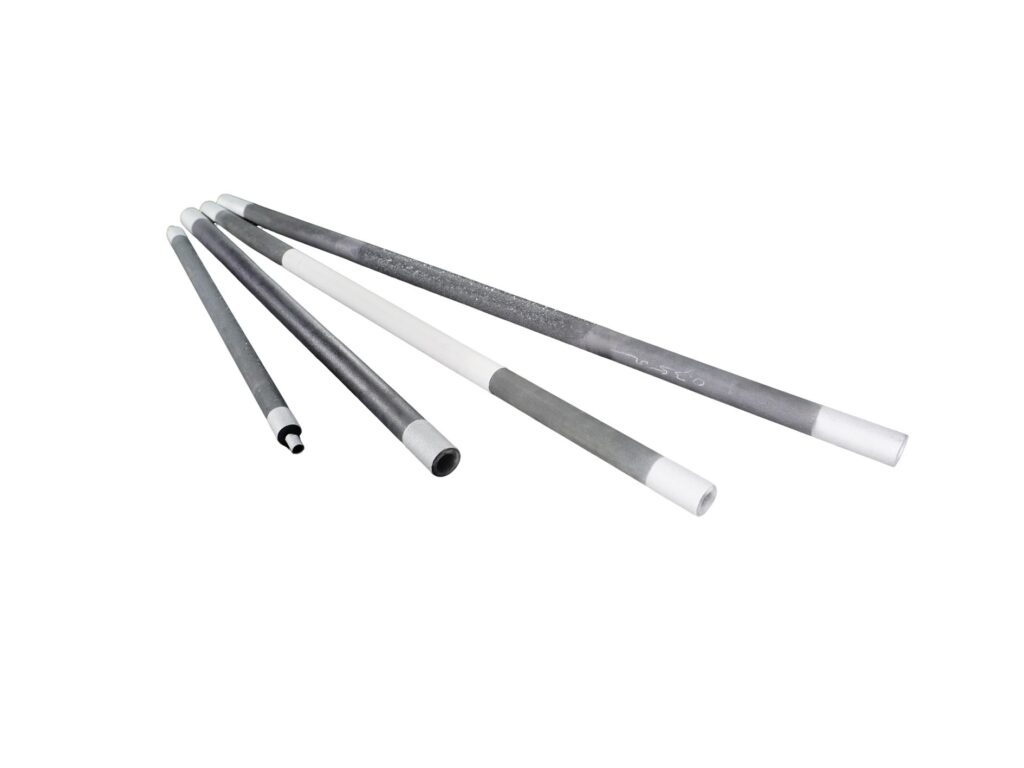
Although metallic elements prove affordable for cooler uses, they miss the "Hot Strength" essential for current industrial kilns. Metals begin to yield as they near 1200°C, but a silicon carbide heater preserves its solid crystal makeup, which guarantees no warping even beneath substantial surface pressures.
The chief difficulty with metal heaters involves their restricted working scope. Most Fe-Cr-Al or Ni-Cr alloys turn unsteady past 1200°C. By comparison, Songshan SiC heating elements consist of high-purity green hexagonal silicon carbide (purity ≥ 98.5%), and they undergo sintering via a 2200°C recrystallization method. Consequently, they function dependably at furnace temperatures reaching 1450°C, while certain models manage up to 1600°C in oxidizing conditions.
Industrial areas typically hold damaging vapors arising from glazes, fluxes, or metal handling. Metallic elements are very open to chemical harm, which causes "thinning" and ultimate burnout. In fact, a silicon carbide heater develops a shielding SiO₂ layer when warmed to 1000°C–1300°C; this layer functions as a self-mending wall against additional oxidation and numerous chemical threats. As a leading SiC heating elements supplier, Songshan improves this safeguard by adding exclusive coatings of molybdenum disilicide or silicon nitride, thereby lengthening the working life by more than 1.5 times relative to regular elements.
Selecting the correct collaborator holds as much weight as selecting the substance. Songshan distinguishes itself among sic heating elements suppliers through blending 40 years of research and development into each rod we craft. Our items exceed simple parts; they serve as power-conserving answers.
A typical user issue centers on furnace terminal overheating, an event that might injure the furnace casing and squander large quantities of power. Songshan employs a dedicated manufacturing technique for the "Cold Ends." This approach secures a balanced resistance proportion between the hot area and the cold section, thereby directing thermal power precisely to the needed spot as it maintains coolness at the terminals. As such, this advancement notably lowers power usage and averts heat-induced harm to the furnace frame.
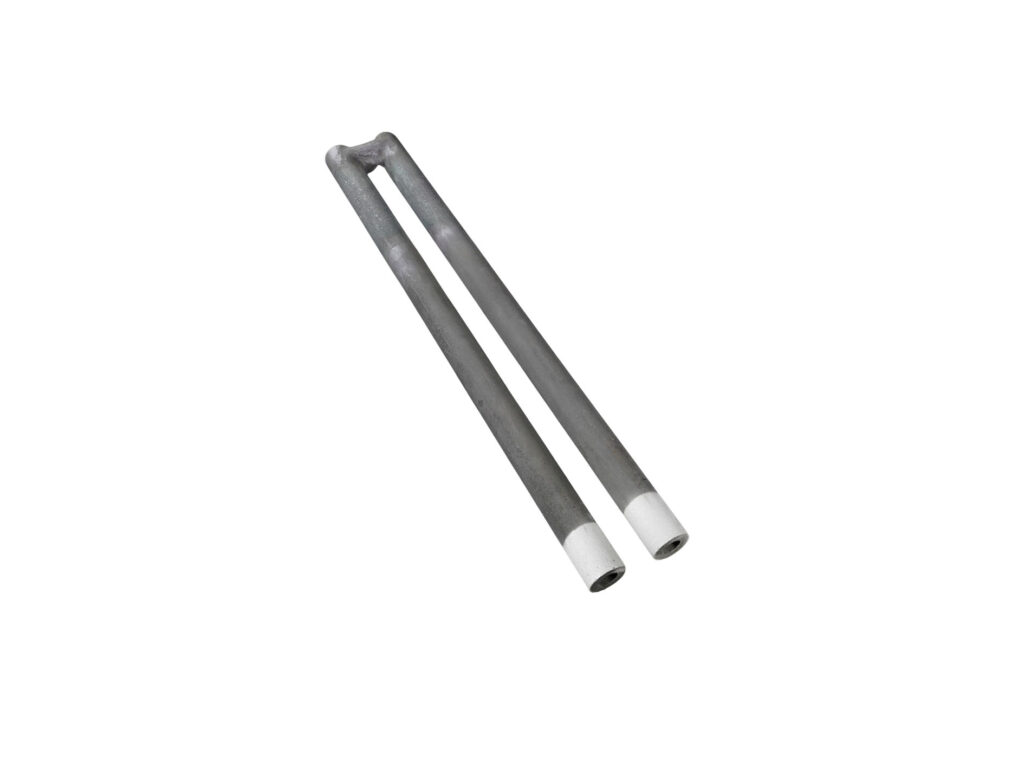
Varying heat patterns call for varying forms. Songshan presents a broad selection of configurations to meet varied Sic heater rod uses:
1.ED (Rod) Type: The sector norm for adaptability, it supplies even warmth over numerous batch and ongoing furnaces.
2.U-Type & W-Type: Crafted for one-sided cabling or three-phase electricity, these fit well in limited-space setups or spots demanding strong power concentration.
3.SCR (Double Spiral) Type: Deliberately built for precise lab muffle furnaces and atmosphere furnaces, where even temperature distribution proves vital.
Songshan delivers beyond mere equipment; we furnish answers for intricate usage cases.
Within the ceramic and glass fields, even minor temperature variations can produce a load of discarded goods. Metallic heaters commonly undergo "creep," a process that shifts the heat emission layout. When makers employ Songshan Silica ED-type elements, they obtain consistent thermal emission (with an emissivity of 0.85–0.87), which secures even baking of upscale ceramics and electronic pieces.
A primary worry for B2B purchasers concerns "aging"—the steady rise in resistance as time passes. Even though aging belongs to SiC by nature, Songshan lessens it with high-density sintering (2.6–2.8g/cm³), a step that cuts porosity below 20% and thus delays oxygen's entry into the material core. Moreover, we supply technical guidance for picking the suitable surface load (W/cm²) according to your particular furnace environment (Air, N₂, CO₂, etc.), all to lengthen the elements' endurance.
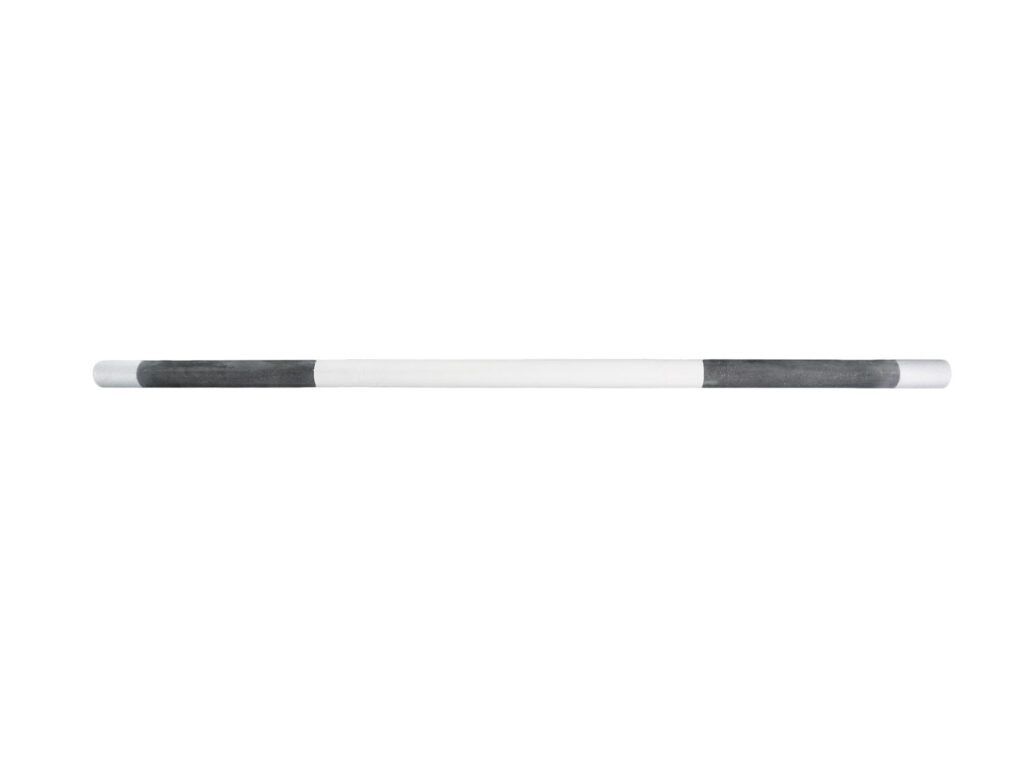
Moving from metallic heaters to a top-grade silicon carbide heater marks a wise choice for any brand seeking to improve output and trim enduring expenses. As the foremost sic heating elements suppliers, Songshan supplies the sturdiness, technical advances, and tailored Sic heater rod uses necessary to flourish in today's high-temperature fabrication.
Optimize your thermal performance today. Contact our technical team for a customized heating solution.
A: SiC upholds its mechanical firmness and avoids drooping or twisting at elevated temperatures, while metal alloys yield and oxidize swiftly.
A: It guarantees reduced resistance at the terminals, channeling warmth into the furnace area to conserve power and guard the furnace framework against overheating.
A: The end of service life arrives when the electrical resistance climbs to four times its original amount owing to the "aging" procedure.
A: Yes, yet with care. Hydrogen may weaken the shielding SiO₂ layer; thus, the working temperature requires precise oversight to halt quicker aging.
A: Yes, our technical team aids in figuring out overall power demands, choosing surface loads, and outlining series-parallel wiring sketches for peak efficiency.
© Henan Zhengzhou Songshan Enterprise Group Co., Ltd