

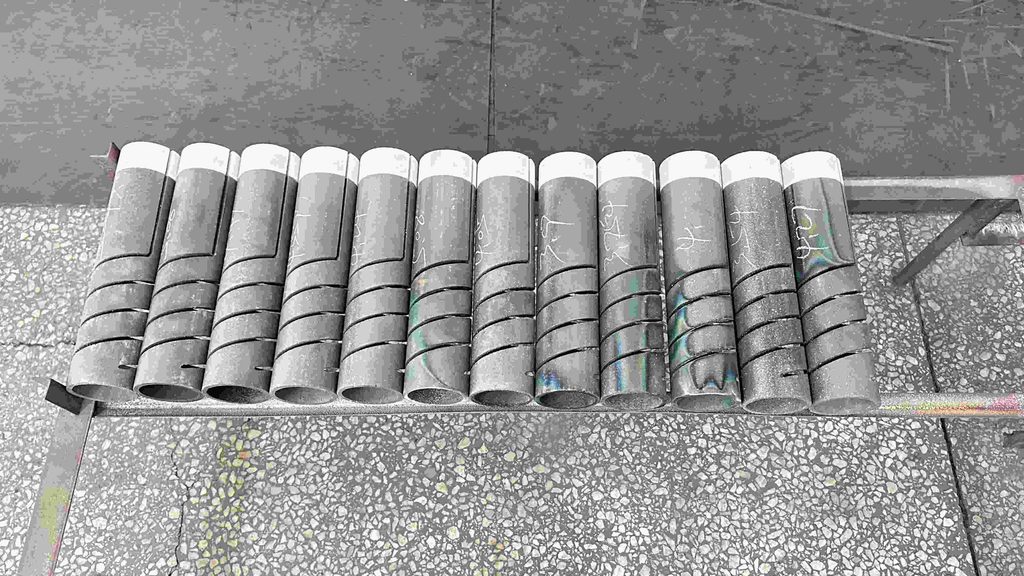
SCR silicon carbide heating elements are a practical choice for compact high-temperature furnaces when the heater shape, hot-zone length, resistance group, and terminal access are matched before installation. The SCR double-spiral form helps engineers place heat where a straight rod or U shape may be difficult to fit, especially when the chamber opening, insulation thickness, or connection space limits the layout.
The goal is not to choose the most unusual shape. It is to keep the working hot zone stable, protect the cold ends, and leave enough room for electrical connection and inspection.
Compact furnaces often create a simple problem: the heating space is useful, but the connection space is tight. A straight silicon carbide heating element may need a longer wall-to-wall span, while a U or W shape may require a terminal arrangement that does not match the furnace shell. Spiral SiC heating elements give another route when heat must be concentrated into a defined area without pushing the terminals into the active zone.
Songshan offers several silicon carbide rod shapes, including ED, DB, U, W, SCR, and UX forms. This article focuses on SCR elements, whose geometry can help address compact furnace layouts where the hot-zone path and connection access must be planned together.
SCR silicon carbide rods use a double spiral arrangement. In practical furnace planning, this shape can help place the hot zone in a compact path while keeping connection ends outside the most aggressive heating area. The result can be useful in chambers where a longer straight hot zone would create uneven coverage or poor access.
The hot-zone length still needs to match the load rather than the full chamber length. If the heated path is too short, edge areas may recover slowly after loading. If it is too long or too close to insulation, localized overheating can shorten element life and make temperature control harder to tune.
Spiral geometry is most valuable when the furnace designer must work around doors, shelves, limited sidewall openings, or existing terminal positions. A SiC heater should not be forced into a chamber simply because its rated voltage looks convenient. The practical question is whether the shape allows clean support, safe clearance, and predictable radiant exposure.
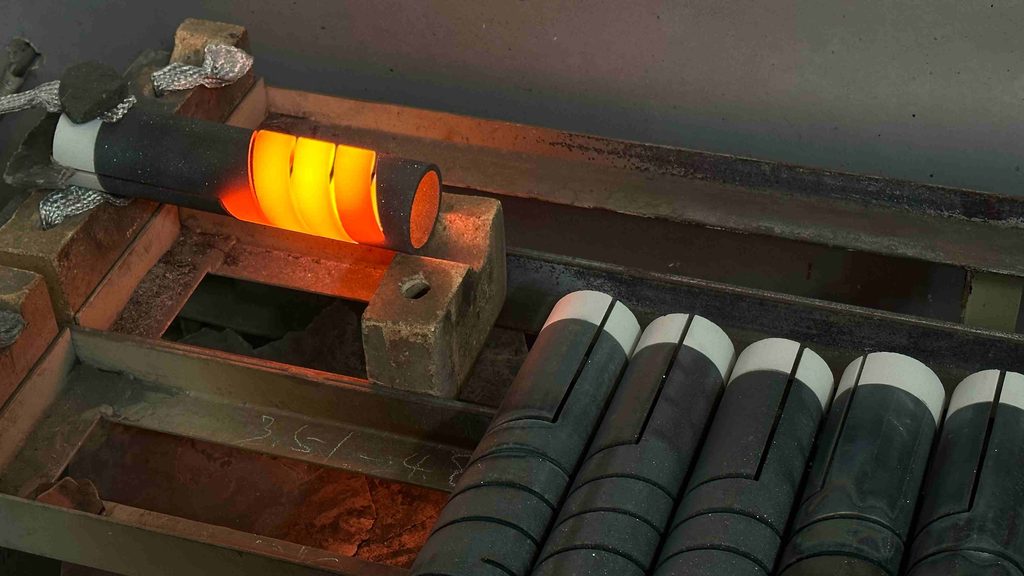
SiC heating elements behave differently from metallic heating elements because resistance changes with temperature and service time. A new set may perform well at startup, but uneven resistance grouping can later create a circuit where one element works harder than the others. In compact furnaces, that imbalance may show up quickly because there is less space for heat to even out naturally.
Before installation, elements in the same circuit should be grouped by resistance. Local product information identifies a group deviation target within plus or minus five percent, which is a useful working basis for stable electrical loading. The exact operating voltage then needs to fit the furnace controller and the element resistance rather than being treated as a stand-alone choice.
When silicon carbide rods with very different resistance values are connected together, the load can become uneven. In series circuits, higher-resistance elements may carry a different thermal burden, while parallel arrangements must still be checked so the current distribution remains balanced. Good grouping reduces hot spots and helps the furnace recover more predictably after loading.
For a compact furnace, small deviations can become visible as temperature drift, slow recovery, or early local aging. Operators may first notice that one area of the chamber reaches temperature earlier than another. By then, the issue is often not the material alone but the relationship among resistance, wiring, and placement.
Silicon carbide heating elements gradually age during high-temperature service. As the surface reacts in operation, resistance rises and the available power at a fixed voltage can fall. This is why an adjustable transformer or SCR control strategy is often part of a serious SiC furnace heating system.
A silicon carbide heating element is strong in high-temperature service but brittle enough to deserve careful handling during installation. Impact, bending force, or poor support can damage the element before the furnace ever reaches temperature. Spiral forms should be handled especially carefully because the useful geometry can also create stress if the element is twisted into position.
Clearance matters as much as the element itself. The hot zone should not press against insulation, shelves, setters, or the load. Cold ends and connection straps need a cooler, accessible area so inspection and replacement do not become a full furnace rebuild.
The cold ends are not just extensions of the heater; they are part of the electrical and maintenance layout. If terminals sit too close to the active hot zone, connection hardware can overheat or become harder to service. If access is poor, operators may delay inspection until a small imbalance becomes a shutdown problem.
Aluminum braid straps and clamps are common accessories for SiC elements, and the connection should be secure without creating mechanical stress. For spiral SiC heating elements, the installation record should include the shape, outer diameter, hot-zone length, cold-end length, overall length, resistance, and circuit position. That record becomes valuable when the next replacement is planned.
New or long-idle furnaces should be dried before full operation, and voltage should be increased gradually. Applying full load too quickly can create electrical and thermal stress, especially if moisture remains in the insulation or the furnace has a large temperature difference from the surrounding shop. Controlled startup is a low-cost habit that protects both the element and the power system.
Songshan SCR SiC heating elements make sense when a furnace needs high-temperature electric heating in a constrained chamber and the engineer can define the layout clearly. The strongest use cases are not generic. They involve a known furnace opening, a defined load area, a workable connection side, and a control system that can manage resistance change over time.
For new compact furnace projects, start with the chamber drawing and loading pattern, then assess the SCR form against heat coverage, terminal location, clearance, and service access.
SCR SiC heating elements are valuable because they solve a real furnace layout problem: the double-spiral geometry helps place radiant heat in a compact zone while keeping resistance matching, cold-end access, and controlled startup in view. When shape, circuit, atmosphere, and service planning are reviewed together, the heater is more likely to support stable production instead of becoming a recurring maintenance concern.
Explore Songshan SCR SiC heating elements to match double-spiral geometry with compact furnace design.
A: SCR SiC heating elements use a double-spiral hot-zone path rather than a simple straight rod layout. This shape can help compact furnaces place heat in a smaller or offset area while leaving terminals accessible. The right selection still depends on furnace dimensions, resistance value, voltage, and support arrangement.
A: SCR rods are useful when the chamber layout benefits from a double-spiral path. Selection should start with the hot-zone requirement, terminal location, available clearance, circuit design, and the way products are loaded into the furnace.
A: Resistance matching helps each element in a circuit carry a balanced load. If resistance differences are too wide, one area of the furnace may heat unevenly or age faster. Matching is especially important in compact furnaces because a small imbalance can affect temperature recovery and local hot spots more quickly.
A: A new or long-idle furnace should be dried first, then brought up gradually rather than placed under full load immediately. Gradual voltage increase reduces thermal shock and current impact. Operators should also check connection tightness, terminal temperature, and early heating balance before relying on the furnace for normal production.
© Henan Zhengzhou Songshan Enterprise Group Co., Ltd