

2026-08-13
A silicon carbide heating rod performs reliably when its resistance, voltage, hot-zone position, and furnace atmosphere are managed together. Most performance problems come from mismatched resistance, rapid startup, incorrect replacement habits, or natural oxidation during service. Songshan's SiC products give furnace teams practical reference points, including 110V to 480V voltage options, 8mm to 65mm tube diameters, and multiple element shapes for different furnace layouts.
A silicon carbide heating rod does not behave like a simple metal wire. During high-temperature operation, the SiC surface gradually oxidizes, and the electrical resistance rises over time. This aging is normal, but it must be managed with appropriate voltage adjustment and replacement planning.
If the operator applies full voltage too quickly after installation, the element and furnace lining may experience unnecessary thermal stress. A controlled startup gives the heater time to stabilize and makes it easier to identify wiring or connection problems before the chamber reaches demanding operating temperatures.
Songshan's silicon carbide rod products include ED rod type elements made from silicon carbide, with voltage options from 110V to 480V and tube diameters from 8mm to 65mm. These parameters matter because resistance behavior must be understood in relation to the complete furnace circuit.
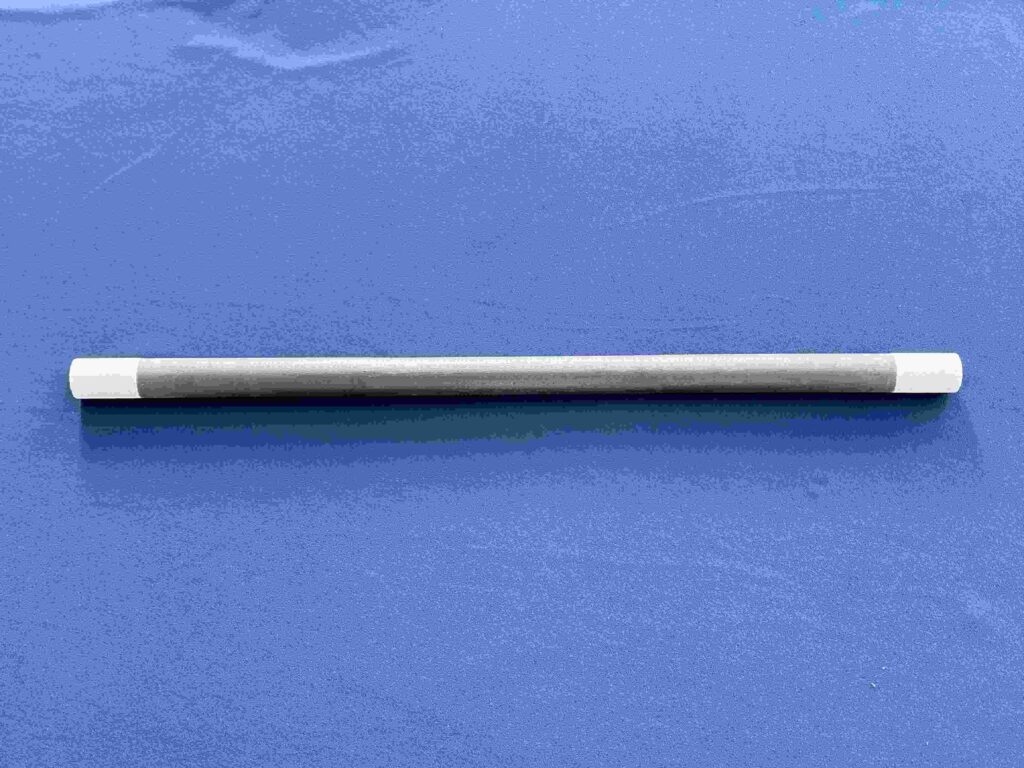
Resistance matching is a practical maintenance rule, not a minor paperwork step. Songshan installation guidance indicates that elements in the same group should be matched within a plus or minus 5% resistance deviation before installation.
When one SiC heater has noticeably lower resistance than the others, it may draw more current and run hotter. When another element has higher resistance, it may contribute less heat, leaving the furnace controller to chase an average temperature while the chamber itself becomes uneven.
Before installing a silicon carbide heating rod, check outer diameter, total length, hot-zone length, cold-end length, terminal condition, and resistance.
The hot zone should sit fully inside the heated chamber, while the cold ends should pass through the insulation and remain suitable for electrical connection. If the element is dimensionally close but not exact, the furnace may still operate, but terminal temperature, heat distribution, and service life can all suffer.
Replacing a single failed SiC heating element without checking the rest of the group can create a hidden imbalance. New elements and older elements often have different resistance values because the older ones have already aged in service.
For multi-element furnace zones, replacement planning should compare the whole set. Keeping resistance records by position helps maintenance teams decide whether to replace one element, pair elements carefully, or refresh a complete zone for better uniformity.
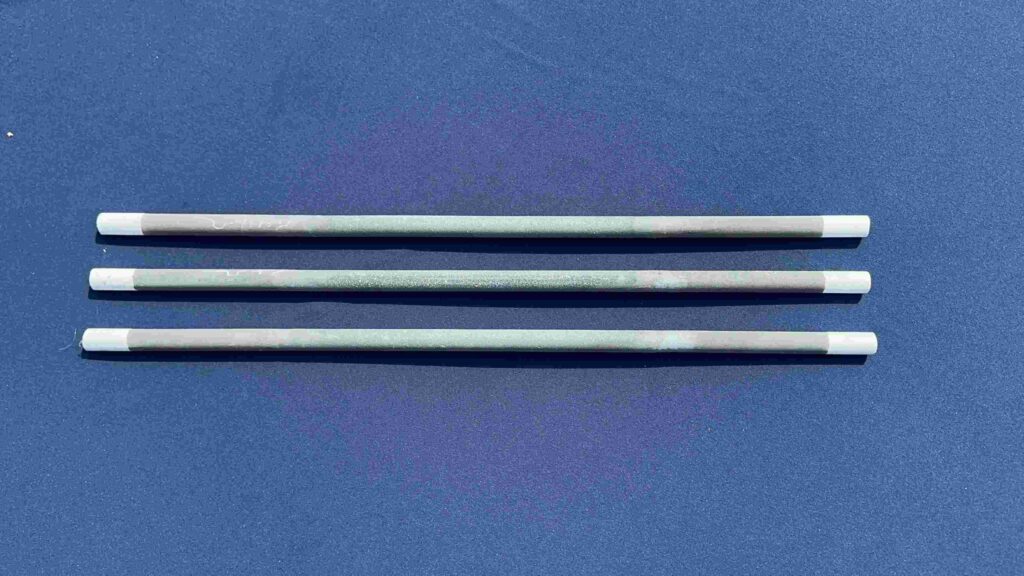
Voltage control is closely tied to SiC aging. As resistance increases during service, the furnace may need gradual voltage adjustment to maintain the same thermal output, but that adjustment should remain within the equipment's electrical design.
A silicon carbide heating rod should be brought up carefully after installation. Sudden full-load operation can make early troubleshooting harder because a wiring error, loose clamp, or poor contact may only become obvious after the element is already under severe thermal stress.
Stable operation also depends on the furnace atmosphere. Air, process gases, moisture, and load conditions can influence surface oxidation and heat transfer. When the atmosphere is unusual, the element selection should be reviewed against the actual temperature cycle rather than based only on physical dimensions.
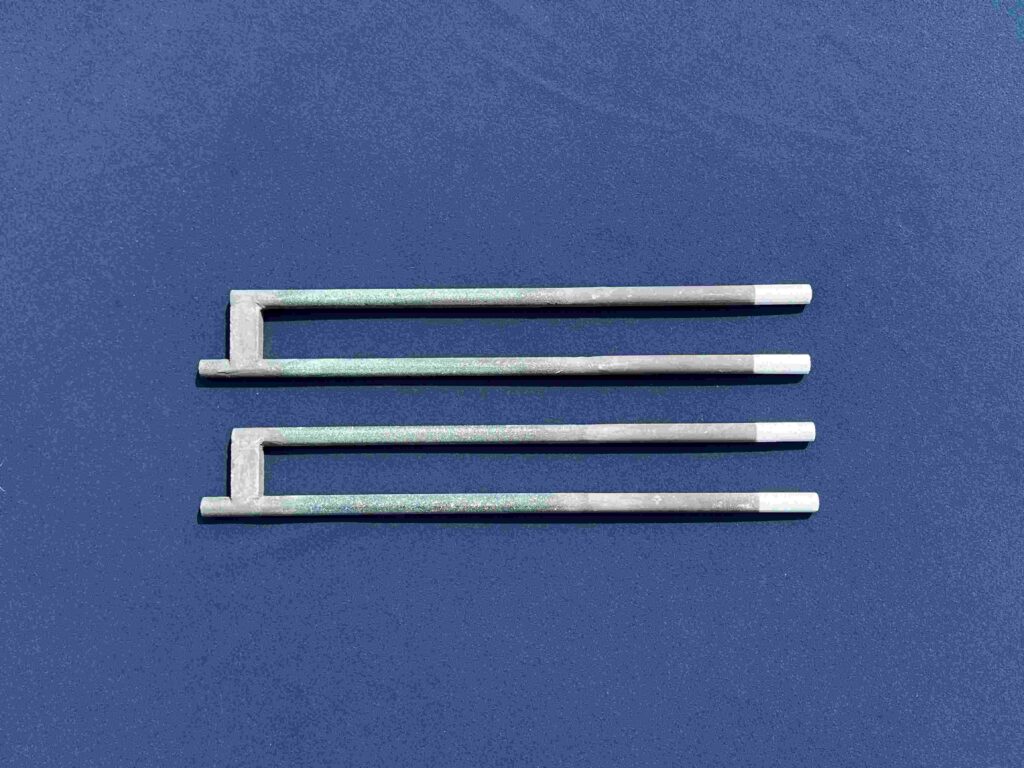
A straight rod is not always the best answer. Songshan offers ED rod, U, W, SC, SCR, and UX styles within its SiC heating element range, and each form solves a different layout problem.
The ED rod type supports straightforward furnace layouts where the element can pass through the chamber in a direct line. U and W types help when the furnace benefits from same-side terminals or broader heat coverage. Spiral forms can support compact heating paths where space is limited.
For example, the SC single spiral type can be considered when a compact spiral geometry fits the chamber better than a straight rod. The decision should still be grounded in voltage, resistance, dimensions, and the practical access available around the furnace shell.
A silicon carbide heating rod is often used in electric furnaces for ceramics, powder metallurgy, glass metallurgy, machinery, and magnetic material processing. These applications are demanding because the furnace may run at high temperature for long periods, cycle repeatedly, or process loads that change thermal absorption.
In ceramic firing, uniform heat helps stabilize shrinkage and surface quality. In powder metallurgy, stable temperature supports sintering consistency. In glass-related heating, controlled radiant output can reduce process variation across the chamber.
Songshan becomes relevant in these scenarios because its SiC range includes several geometry options rather than a single heater form. That variety helps technical teams align a sic heating element with the furnace's physical constraints before discussing detailed operating habits.
The most useful maintenance signal is a change in resistance over time. If operators record resistance at installation and compare it during scheduled maintenance, they can see whether aging is gradual, uneven, or unusually fast.
Visual inspection also matters. Cracks, terminal damage, unstable clamps, and signs of overheating near the cold ends should be addressed before the furnace returns to continuous service. Mechanical fit and electrical contact are just as important as the heater rating.
A practical replacement habit is to review the whole heating zone rather than only the failed part. That approach protects furnace uniformity and helps avoid repeated shutdowns caused by old and new elements operating outside a balanced resistance range.
A silicon carbide heating rod is a high-temperature component whose performance depends on matching, installation discipline, voltage control, and the real furnace environment. Songshan's SiC product range gives engineers enough geometry and parameter choices to treat heater selection as a controlled furnace decision, not a last-minute spare-part swap.
Review the broader SiC heating elements range when planning a stable furnace zone or updating an existing element set.
A: Resistance rises mainly because the SiC surface oxidizes during high-temperature service. This aging is expected, but the rate can vary with temperature, atmosphere, loading, and operating habits. Gradual voltage adjustment and regular resistance records help keep furnace performance predictable.
A: They can be mixed only after resistance values are checked carefully. Older elements usually have higher resistance because they have aged in service. If the difference is too large, the furnace zone can become uneven even when every individual element still works.
A: The key dimensions are outer diameter, hot-zone length, cold-end length, and overall length. These determine how the element fits through insulation, where heat is released, and whether terminals remain outside the hottest part of the furnace structure.
A: Operators should match resistance before installation, increase voltage gradually during startup, maintain clean and secure electrical connections, and record resistance changes over time. Correct element shape and dimensions also matter because mechanical stress and poor terminal placement can shorten service life.
© Henan Zhengzhou Songshan Enterprise Group Co., Ltd