Your position : Home » News » Global MoSi2 Heating Element Market: Market Size, Supplier Landscape, & High-Temperature Performance Insights
Global MoSi2 Heating Element Market: Market Size, Supplier Landscape, & High-Temperature Performance Insights
2026-11-12
Global MoSi2 Heating Element Market & Industry Landscape
Understanding the driving forces behind the growing global MoSi2 heating element market, along with supplier capabilities, is crucial for successfully navigating the market. Industrial furnace manufacturers and buyers need to understand the size of the MoSi2 heating element market, technological development, and the state of global suppliers in order to discover potential sourcing options. The following sub-sections address these issues, including Songshan’s contribution to thermal manufacturing.
Market Context & Industry Growth Drivers
Fast industrialization processes and high standards of thermal process control keep changing the high-temperature heating industry.
Market Growth: The size of the MoSi2 heating element market is growing steadily due to an increasing demand for high-performance electric heating for advanced ceramics production, glass production, and semiconductor sintering.
Industry Trends: Important trends in the MoSi2 heating element market concern high thermal efficiency, longer operating life under continuous thermal processes, high stability of materials, and a move towards decarbonized electric heating.
Industrial Applications: Advanced MoSi2 heating elements used in modern industrial furnaces replace old combustion systems, providing clean heating and a thermal field distribution without any contamination of the furnace atmosphere.
Established in 1980, Songshan stands as a globally recognized leader in high-temperature electric heating components and refractory materials.
Four Decades of Expertise: Songshan possesses over 40 years of continuous R&D and manufacturing excellence, holding a dominant 70% domestic market share in China.
Global Reach & Certifications: Operating under an ISO9001-certified quality system, Songshan exports high-performance heating products to over 40 countries across North America, Europe, and Asia.
Market Leadership: Recognized as a top MoSi2 heating element manufacturer in China and a trusted global molybdenum disilicide heating element supplier, Songshan combines full technical support with large-scale production capacity for customers evaluating international MoSi2 heating element manufacturers and MoSi2 heating element suppliers.
Technical Performance & Material Insights
Knowledge about the physical and chemical characteristics of molybdenum disilicide is essential when choosing components that are able to survive high-temperature conditions. The analysis of passivation principles, MoSi2 heater corrosion resistance, and high-temperature alloy materials is provided below.
Oxidation Resistance & Passivation Mechanisms
The basic strength of molybdenum disilicide heaters stems from the self-passivating property of the surface in a high-temperature oxidizing environment.
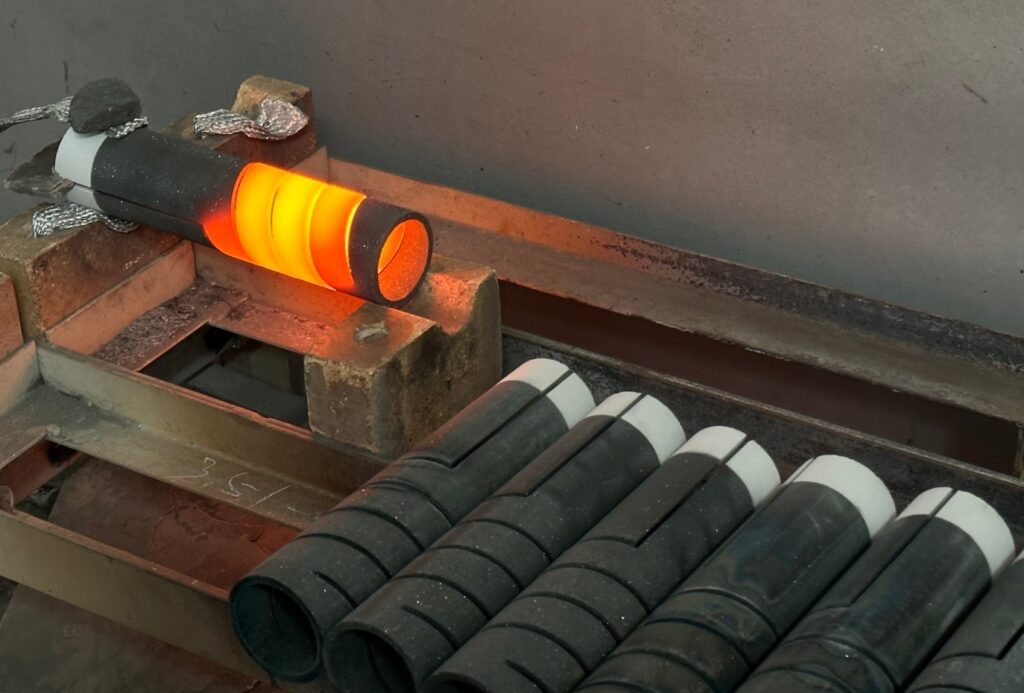
Quartz Passivation Layer: The resistance to oxidation of the MoSi2 heating element is based on the fact that a thick quartz (SiO2) glass layer forms automatically above 1000°C in an oxidizing atmosphere.
Microstructure Self-healing: In case the microstructure cracks on the surface form due to thermal cycling, the protective (SiO2) layer will melt again and seal to provide protection from oxidation for the high-temperature MoSi2 heater.
Electrical Stability: Unlike silicon carbide heaters, the resistance of MoSi2 does not deteriorate with the operation time and can be used with new elements in the same circuit.
Material Grades: 1700°C to 1900°C Performance
Choosing the proper thermal grade would ensure proper energy transfer and structural integrity in tough operating environments.
Songshan Super MS17: Specified as standard grade of high-temperature MoSi2 heating elements, MS17 grade can withstand maximum temperatures of heating elements up to 1700°C for heat treatment furnaces.
Songshan Super MS18: Designed for use as a premium grade of 1800°C MoSi2 heating elements, the MS18 grade can provide a high level of creep resistance at elevated temperatures.
Ultra-High Temp Innovations: High-grade heating elements with a temperature range up to 1900°C can manage extreme thermal stresses by avoiding low-temperature pest oxidation from 400°C to 700°C.
The assessment of global MoSi2 heating element producers and MoSi2 heating element providers entails the examination of the element's form, ability to engineer it specifically, production uniformity, and economic value in general. Those who compare a MoSi2 heating element producer in China with other companies in the international market must take into account additional factors.
Element Geometries & Customized Engineering
Element shape matching with particular furnace vault designs guarantees even heat distribution and easy installation.
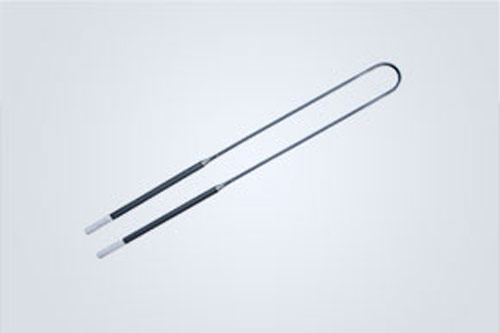
Universal U-shaped Elements: Versatile U-shaped MoSi2 heating elements with thick cold ends and proper hot zones serve as the universal geometry for the vertical top-hanging furnace design.
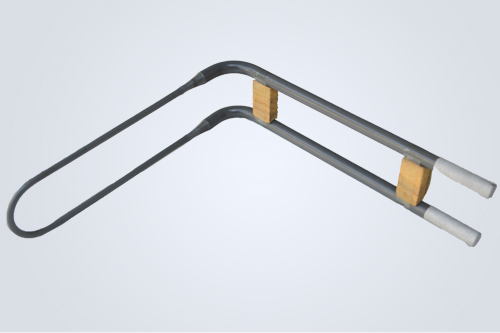
Complicated Element Shapes: Songshan produces W-shaped, L-shaped, ring-shaped, and round-shaped MoSi2 heating elements to meet complicated side wall and offset chamber designs.
Custom Elements: Songshan provides customized MoSi2 heating elements with precise hot zone lengths (Le), cold end lengths (Lu), shank spacing (A), and terminal diameter (D1/D2) according to customer engineering drawings.
Commercial Value: Considering the total cost of MoSi2 heating elements against their functional life proves that high-density silicide heaters provide better value for money, especially when comparing various MoSi2 heating element suppliers' offers.
Industrial Application Scenarios & Problem Solving
Songshan heating elements specifically target the typical thermal engineering limitations within different processing industries.
Advanced Ceramics Sintering: Songshan heating elements using MoSi2 material offer uniform temperature control in zirconia and alumina sintering operations up to 1750 °C in order to avoid the formation of microstructure defects.
Glass Melting and Refining: The use of high-temperature MoSi2 elements in glass melting operations helps avoid any contaminants that may be formed due to combustion products, thereby offering pure radiant heat from electricity in special optical and container glass furnaces.
Powder Metallurgy and Crystal Growth: Customized heating elements utilizing the low-resistance cold-end welding design help prevent any burnout or overheating in alloy sintering and single-crystal furnaces.
Laboratory Muffle and Atmosphere Furnaces: Specialized heating elements help avoid premature failure of elements in vacuum or reducing gas atmosphere furnaces due to customized surface loadings and coatings.
Strategic Procurement & Commercial Engagement
Cooperation with an experienced manufacturer ensures technical support and customized component design. Procurement professionals who operate in the global MoSi2 heating element market need to take into consideration technical support, production capabilities, product quality, and MoSi2 heating element price, and not concentrate only on the purchase price.
Direct Contact With Manufacturer: Industrial furnace manufacturers and company procurement professionals may get in touch directly with Songshan's application engineers to design proper heating systems, such as U-shaped MoSi2 heating elements, 1700°C, 1800°C, and 1900°C types.
Special Quotations and Technical Consultation: Get special drawing analysis, surface load calculation, and competitive pricing for custom MoSi2 heating elements used in high-temperature replacement or new installations.
Communication Channels Worldwide: Please contact us at Songshan High-Temperature Solutions by calling +86-15639799780 or emailing [email protected] in order to speed up your thermal engineering project and communicate directly with an experienced molybdenum disilicide heating element supplier.
FAQ
Q: What is the maximum operating temperature of MoSi2 heating elements in oxidizing vs. inert environments?
A: In oxidizing environments, premium 1800°C MoSi2 heating elements and 1900°C grade MoSi2 heating elements have maximum operating temperatures of 1800°C-1900°C. In inert environments like nitrogen, argon, or helium, the maximum element temperatures are restricted to about 1600°C-1700°C owing to instability of the protective silica film.
Q: What is low-temperature pest oxidation in MoSi2 heating elements and what is its cause?
A: Low temperature pesting oxidation happens at temperatures ranging between 400°C-700°C, where the oxygen enters the grain boundary without formation of a protective (SiO2) layer causing the material to structurally break down. This can be avoided by rapid heating of the furnace through this temperature range when starting up.
Q: Why are U-shaped MoSi2 heating elements normally mounted vertically rather than horizontally?
A: At temperatures beyond 1200°C, MoSi2 material becomes ductile and therefore susceptible to sagging due to gravity when mounted horizontally. Vertical hanging of the element from the top of the furnace will help avoid mechanical stresses.
Q: What is the impact of cold-end diameter ratio on the functioning of elements and their terminals?
A: Cold ends (Lu) have been designed with large diameter sizes (for example, D2 is double D1) in order to ensure that there is little electrical resistance and heat produced outside the furnace chamber.