

Furnace atmosphere is one of the main conditions determining how long SiC heating elements remain stable. Oxygen can help a silicon carbide heating element form a protective SiO2 film, while water vapor, hydrogen, halogens, alkaline compounds, and molten metals can accelerate corrosion, resistance growth, or early failure. Matching the gas environment to the element design is therefore as important as choosing power and length.
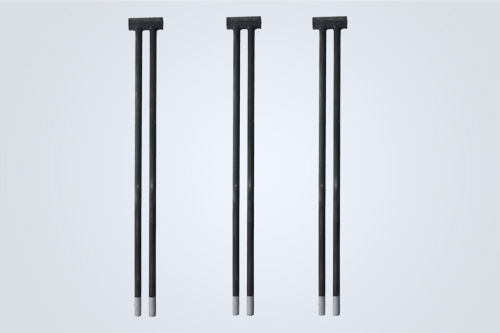
A SiC heater does not work in isolation from the furnace chamber. The element surface exchanges heat with the load and reacts with gases or vapors released by the process, so the same silicon carbide rods can behave differently in a clean oxidizing kiln and in a chamber containing moisture, reducing gases, metal vapors, or alkaline dust.
This matters in ceramic firing, glass processing, powder metallurgy, magnet production, and other high-temperature work. A stable atmosphere helps keep the hot zone predictable; a chemically aggressive atmosphere can change the surface condition and increase the electrical resistance that the power system must overcome.
When the hot zone operates in air, silicon carbide gradually reacts with oxygen and forms a silicon dioxide film on the surface. At suitable temperatures, this film slows further oxidation, which is why SiC elements are widely used in oxidizing electric furnaces. A protective hot-zone coating can improve antioxidant performance and reduce the speed of aging in demanding furnace conditions.
The film is not an unlimited shield. Excessive element temperature, repeated thermal cycling, or corrosive vapors can damage its continuity. When the surface condition changes, the resistance of the silicon carbide heating element tends to rise with service time, and the controller may need more voltage to maintain the same heating output.
Clean air is generally the most straightforward environment for SiC heating elements. The practical target is not simply the highest possible temperature, but a balanced relationship between furnace temperature, hot-zone surface temperature, surface load, and the atmosphere around the rod.
A ceramic kiln, for example, may release moisture, binders, or alkaline compounds as the charge heats. Ventilation, drying, and a controlled heating curve can reduce the stress placed on the protective surface during start-up. These operating habits often influence service life more than a single nominal temperature value.
Water vapor is especially important because it can accelerate oxidation and weaken the protective layer at high temperature. A humid furnace that is heated too quickly may expose the hot zone to a more aggressive environment before the process has stabilized, increasing resistance drift and shortening the useful interval between element changes.
Hydrogen and other reducing atmospheres must be treated equally carefully. In addition to hydrogen, nitrogen, chlorine, sulfides, acids, alkalis, salts, and certain process fumes can cause damage to SiC at high temperatures. It is important to choose an appropriate treatment based on the actual chemistry inside the furnace; the composition of the gas must be known when selecting elements and planning maintenance.
Alkaline and alkaline-earth oxides are capable of reacting with SiC to form silicates under high temperatures. In ceramic and glass fabrication processes, dust or vapors emanating from the charge material can come into contact with the metal even if the furnace is run under air conditions. Physical separation and proper charging can prevent such contact.
Molten metal that contains cobalt, nickel, and chromium might attack a silicon carbide heating element due to their contact at elevated temperatures. Halogen-containing gases can also reduce the effectiveness of the SiO2 film. If the process cannot avoid these species, protective tubes, coatings, revised placement, or a different heating element material may be more appropriate than simply increasing electrical input.
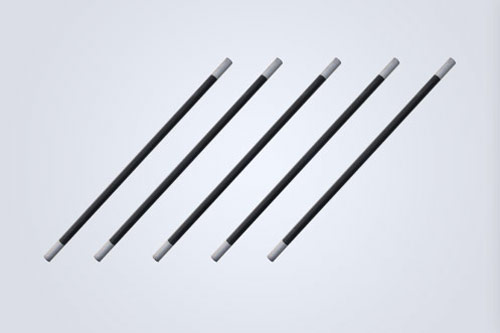
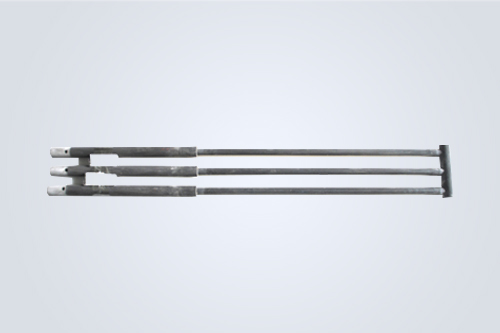
Songshan SiC heating elements are available in ED rod, DB dumbbell, U, W, SC single-spiral, SCR double-spiral, and UX slot forms. That range allows the element layout to be coordinated with chamber geometry, but atmosphere remains a selection constraint: a long ED element in a clean ceramic kiln has different exposure from a compact spiral element near a reactive charge.
Songshan SiC heating elements can be matched to chamber geometry and application details.
During installation, handle the rods carefully, keep the cold ends from overheating, and avoid forcing the element against the furnace wall or filling material. Electrical resistance should be considered when elements are grouped, because a furnace that mixes substantially different resistance values can develop uneven loading and uneven temperature.
For a replacement or new furnace design, the useful discussion with Songshan should include furnace temperature, charge composition, expected vapors, heating cycle, chamber size, element shape, voltage, resistance, and the distance between the hot zone and the workpiece. This turns atmosphere from an afterthought into a practical part of furnace design.
SIC heating element performance and stability are not just dependent on what the material is listed on the spec sheets. A clean oxidative environment will promote the formation of a SiO2 layer, whereas moisture, reducing gases, halogens, alkaline substances, and molten metals might speed up the aging process or cause corrosion. A careful match between furnace atmosphere, element layout, surface load, and operating curve gives Songshan SiC elements a more reliable working environment.
For a furnace-specific discussion of atmosphere, element geometry, and operating conditions, connect with Songshan through the SiC heating elements range.
A: Yes. SiC heating elements are also used in oxidizing furnace atmospheres since a layer of silicon dioxide is formed at the surface, which prevents further oxidation. But again, it is dependent on the temperature, thermal cycling, surface loading, and corrosive atmosphere.
A: Water vapor can accelerate oxidation and damage the protective surface at high temperature. A humid charge, poor furnace drying, or rapid heating through a moisture-rich stage may increase resistance aging. Drying the furnace and controlling the heating curve can reduce unnecessary chemical and thermal stress on the element.
A: This is contingent on concentration, temperature, and time of contact; but hydrogen, water vapour, halogens, sulfur-containing gases, chlorine, basic compounds, and metal vapour are highly aggressive. The design of the furnace must consider the environment in which the heating takes place and not merely be grouped as air, nitrogen, or reducing.
A: If the charge produces corrosive fumes, if there is direct exposure to the molten materials, or if an atmospheric condition of the furnace cannot be controlled to reduce its aggressiveness, then one can think of using a protective tube or coating. However, this decision should depend on process chemistry, temperature of the elements, design, and maintenance considerations.
© Henan Zhengzhou Songshan Enterprise Group Co., Ltd