

In the demanding field of industrial thermal processing, equipment breakdowns cause major losses in profits. Facility managers often deal with early oxidation of elements, physical breaks, and rising energy expenses due to poor heat transfer. When a furnace halts, production stops completely. The makeup of your heating elements determines whether you achieve smooth operations or face ongoing problems.
At Songshan, we grasp these challenges well. As a vital high-tech company and a top maker of high-temperature electric heating elements, we have devoted years to improving material science. This helps address the exact industrial issues. Whether you work on firing advanced ceramics or handle detailed pharmaceutical glass making, our emphasis on fresh ideas and top quality keeps your thermal setups effective and dependable.
Metal elements appear often, but they tend to break down at the very high heat needed by today's industry. Detailed studies reveal that non-metal ceramic elements, especially Silicon Carbide (SiC) and Molybdenum Disilicide (MoSi2), deliver better resistance to oxidation and corrosion.
As a premier high-quality sic heating element supplier, Songshan uses carefully chosen top-grade green silicon carbide as the main material. These elements get shaped into blanks. Then, they go through a strict method of high-temperature siliconization and recrystallization above 2200°C.
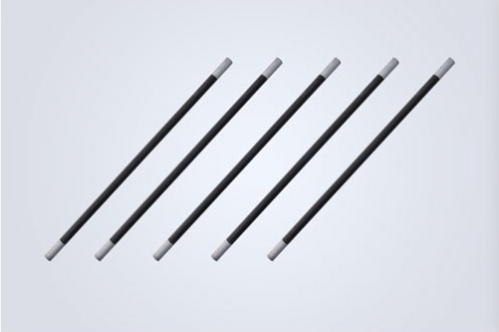
The outcome creates a "bridging" bond among SiC particles. This gives outstanding mechanical durability and even electrical flow. For users, it results in fewer "hot spots" that cause local burning and element breakdowns. As an industrial sic electric heater element supplier, we offer options like our high-density silicon carbide rod for heating. It provides a working life 1.5 to 2 times longer than standard types.
For very high heat uses up to 1800°C, MoSi2 elements stand as the best choice. The strength of a Songshan MoSi2 element comes from its ability to build a tight quartz (SiO2) shield layer when heated. This layer serves as a self-repairing wall against further oxidation. If damage occurs to the layer, it rebuilds during steady operation in oxygen-rich settings. Thus, it keeps the element strong.
The biggest issue with SiC elements is "aging." Over time, electrical resistance slowly increases as oxygen seeps into the material. The oxygen reacts with SiC grains to form SiO2, which leads to a decrease in density and a decline in performance.
To address this issue, Songshan focuses on improving the core density and reducing the porosity during production. By using high-density silicon carbide heating rods, the contact area between oxygen and the material is significantly reduced. This slows down the increase in resistance, allowing the element to maintain a stable heating output for a longer period compared to lower-density versions.
Users lose efficiency when heat leaks out through furnace walls. Songshan applies a unique manufacturing method for the "cold ends" of our elements. We adjust the resistance balance between the hot area and the cold end. This makes sure heat stays right where needed—in the furnace space. It cuts energy use and stops excess heat from harming the furnace body and connection points.
Picking the correct element means aligning material traits with certain environmental pressures.
In aluminum melting furnaces, keeping a steady 800°C temperature matters greatly. A high-quality sic heating element supplier like Songshan enables exact control of surface load. For example, at 800°C in the furnace, a SiC rod can manage a surface load of 17 W/cm². Our approach ensures the elements avoid overheating, even with strong heat radiation in the melting task.
Industrial furnaces frequently hold water vapor or halogens. These can quickly wear down elements without protection. Water vapor combines with SiC to form gaseous hydrates. This leads to fast thinning of the rod.
The Solution: Songshan supplies elements with unique shield coatings. These come from heat-resistant items like alumina and silicon nitride. Tests show they lengthen element life by over 1.5 times in tough settings.
As an industrial sic electric heater element supplier with a 70% share in the home market and reach in more than 40 nations worldwide, Songshan acts as more than a producer. We serve as a technical ally. Our quality control follows the tough ISO9001 rules. This guarantees every high-density silicon carbide rod for heating meets global standards (ASTM C1477-20).
Our skills go beyond heating elements. They cover making top-grade pharmaceutical butyl rubber stoppers, too. This shows our focus on accurate production in high-tech areas.
Efficiency in electric heating arises from strong material knowledge and smart design. By choosing elements built to fight aging, endure harsh atmospheres, and reduce energy waste, you safeguard your profits.
Songshan stays committed as the high-quality sic heating element supplier that industries rely on for their toughest high-heat demands. Contact us now to improve your furnace output!
A: Standard models reach 1400°C, while special high-density models can handle up to 1500-1600°C.
A: An element is generally considered to have reached the end of its service life when its resistance increases to four times its initial value.
A: Yes. Because the resistivity of MoSi2 rises rapidly with temperature and does not change significantly with time, new and old elements can be mixed in the same circuit.
A: Our cold-end process reduces energy waste and prevents the furnace shell from overheating, which protects the furnace structure.
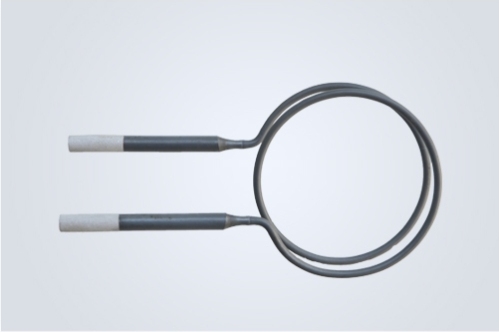
A: Yes, we offer various shapes, including U-type, W-type, spiral, and dumbbell shapes, to fit diverse furnace designs.
Copyright©Zhengzhou Songshan Heating Elements Co. Ltd