

2026-08-21
SiC heating elements are a strong choice for industrial furnaces that need high-temperature heat, stable radiation, and practical maintenance without relying on metallic heating coils. They are especially useful in ceramic, glass, metallurgy, powder treatment, and other electric furnace systems where heat output must stay predictable over repeated cycles. Songshan focuses on silicon carbide heater products that give furnace designers several geometry options rather than a single fixed rod format.
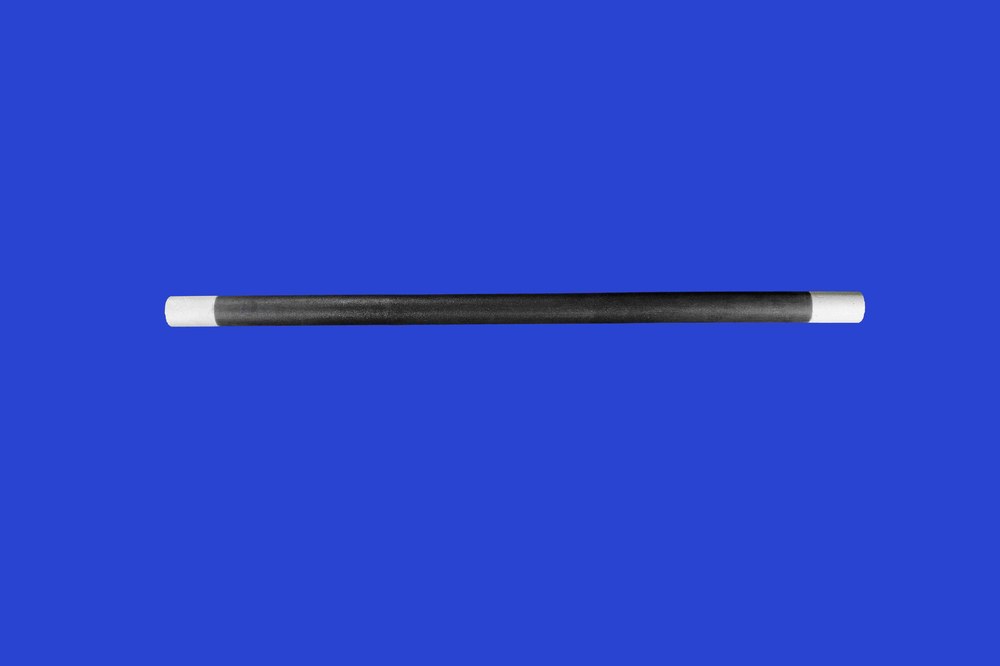
A silicon carbide heating element is a non-metal electric resistance element made with green silicon carbide as the main material, then formed, silicided at high temperature, and recrystallized. That structure gives it useful strength in heat zones where metal elements may soften, scale, or deform too quickly.
For furnace operators, the advantage is not only the temperature rating. It is the combination of oxidation resistance, corrosion resistance, limited deformation, and easier replacement when the furnace has to keep running through repeated production cycles.
SiC heating elements radiate heat directly into the chamber and can be arranged around the load according to furnace geometry. In practical industrial use, this helps engineers distribute heat along walls, through side ports, or across zones where a compact metal coil would be harder to protect.
Songshan SiC heating elements includes ED rod, DB dumbbell, U type, W type, SC single spiral, SCR double spiral, and UX slot forms. These shapes let a furnace builder choose between straight-through installation, return-bend layouts, three-phase arrangements, and compact spiral heat zones.
The ED silicon carbide rod specifications include a voltage range of 110-480 V, tube diameters from 8 mm to 65 mm, and a maximum operating temperature of 1450 C. Those values are best treated as selection boundaries rather than standalone promises, because the actual furnace atmosphere, surface load, wiring, and element spacing still decide service behavior.
A straight ED or DB element often fits side-wall or top-entry furnace layouts where the hot zone is easy to align with the chamber. U and W types can be more useful when the design needs both terminals on one side, while SC and SCR spiral styles serve compact zones that need a longer heat path in limited space.
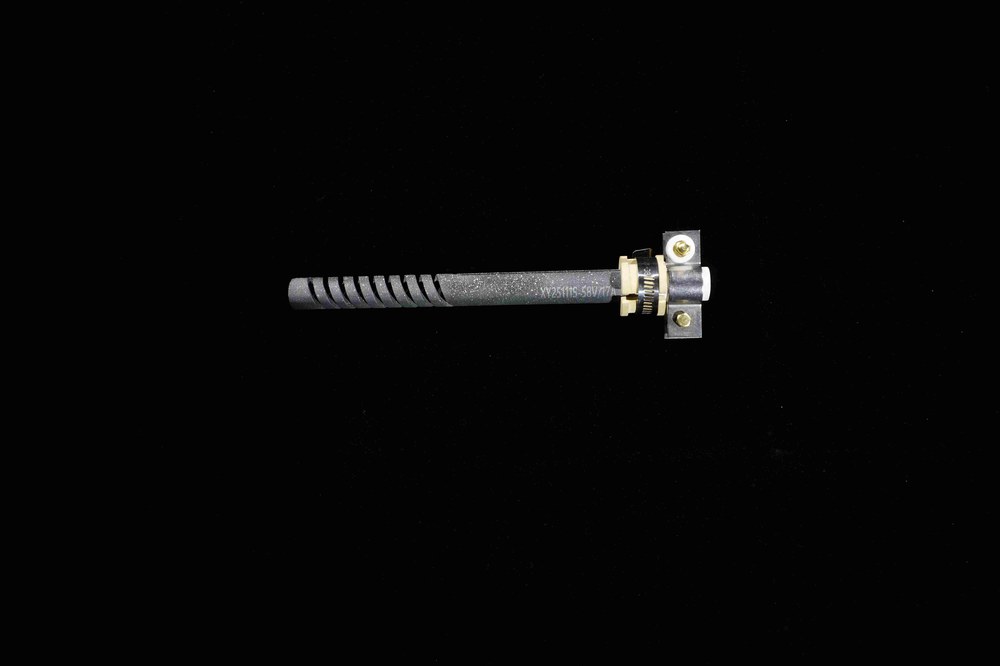
A SiC heater begins to develop a protective SiO2 film on the hot zone when it works in air at high temperature. The film helps slow oxidation, but it is also the reason the furnace atmosphere matters so much. Alkali compounds, certain molten metals, halogens, hydrocarbons, and water vapor can reduce service life if the chamber is not designed around them.
This is why SiC is often chosen by teams that understand their firing cycle and atmosphere clearly. A furnace used for ceramics or powder materials does not face the same chemical exposure as one used near reactive gases or molten metal splashes.
Songshan emphasizes matching element resistance before installation, with resistance deviation within a set kept below +/-5 percent. This matters because uneven resistance can create temperature differences between elements and reduce the uniformity that industrial production depends on.
The furnace should also be brought up to working conditions gradually instead of receiving full load at the start. A transformer, SCR controller, voltage meter, current meter, and automatic temperature control are practical parts of a stable SiC system because the resistance of silicon carbide changes with temperature and increases gradually as the element ages.
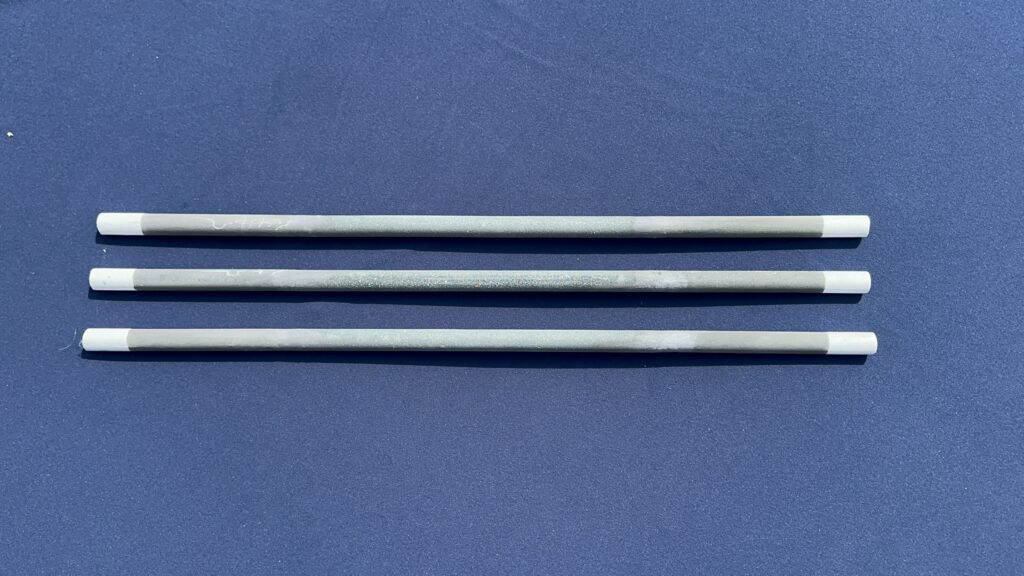
SiC heating elements are commonly suited to electric furnaces used for ceramics, powder metallurgy, magnetic materials, mechanical parts, and heat treatment. These applications often value even radiation, repeatable heating, and replacement options that can be planned during scheduled maintenance.
A silicon carbide rod is also useful where the load shape or furnace lining makes it practical to insert elements through side walls or roof ports. The element can deliver heat close to the chamber while keeping the electrical terminals outside the highest-temperature zone.
Glass-related heating and continuous furnace layouts place different pressure on the element. The goal is not simply reaching a temperature number, but keeping heat distribution stable while the load moves or the chamber cycles through long operating hours.
For continuous lines, element quantity, hot-zone surface area, spacing from the furnace wall, and the power system must be considered together. Songshan's range of SiC forms gives designers room to build around these constraints instead of forcing every furnace into the same heating layout.
Surface load links element temperature, furnace temperature, and radiation conditions. Songshan gives lower recommended surface loads as furnace temperature rises, including less than 17 W/cm2 at 1100 C, less than 9 W/cm2 at 1300 C, and less than 4 W/cm2 at 1450 C.
The safer approach is to design from the chamber temperature, atmosphere, load position, and available hot-zone area, then select the element size and circuit arrangement.
SiC resistance is not fixed across the whole temperature curve. It can show negative behavior at lower heat-up temperatures and positive behavior at higher operating temperatures, while long-term oxidation gradually increases resistance during service.
SiC heating elements remain valuable in industrial furnaces because they balance high heat, practical geometry, oxidation resistance, and serviceable replacement planning. Their best performance comes from matching the element form to the chamber, controlling surface load, respecting atmosphere limits, and using a power system that accounts for resistance change. For furnace teams comparing element formats, Songshan provides a focused SiC product range that supports both new furnace design and maintenance decisions.
Contact us to compare the SiC heating elements that fit your furnace layout and temperature profile.
A: SiC heating elements are used in electric industrial furnaces for ceramics, glass, powder metallurgy, heat treatment, magnetic materials, and similar high-temperature processes. They are selected when the furnace needs strong radiant heat, practical replacement, and element shapes that can fit side-wall, roof-entry, or compact chamber designs.
A: It depends on temperature, atmosphere, and furnace design. A SiC heater can work at higher temperatures than many metal elements and resists deformation better in severe heat zones. Metal elements may still suit lower-temperature systems, simpler atmospheres, or designs where lower cost and easy forming matter more than high-temperature stability.
A: Resistance matching helps each element in a set share electrical load more evenly. If the deviation is too wide, some elements can run hotter while others contribute less heat, which can affect temperature uniformity and service life.
A: Common factors include excessive surface load, sudden full-voltage startup, poor resistance matching, blocked radiation, and aggressive atmospheres containing alkali compounds, halogens, hydrocarbons, water vapor, or corrosive molten metals. Stable control, gradual heat-up, correct spacing, and furnace drying before use help protect the hot zone.
© Henan Zhengzhou Songshan Enterprise Group Co., Ltd