

2026-10-16
MoSi2 heating elements should be selected from the furnace layout, electrical circuit, and operating cycle together. For industrial users, the most reliable choice is the element that covers the working hot zone, matches the available voltage and resistance range, and can be inspected or replaced without redesigning the furnace. Songshan provides product options that can be reviewed against these practical conditions.
MoSi2 heating elements are widely suited to high-temperature ceramic sintering because they provide radiant heat in demanding furnace environments and can form a protective silica layer when used in an oxidizing atmosphere. That protection does not remove the need for careful design, but it helps make MoSi2 heaters a practical choice for ceramic kilns, electronic ceramics, magnetic materials, and other high-temperature processes.
During service in an oxidizing atmosphere, the surface of a MoSi2 heater can form a dense SiO2 or quartz-like protective layer. The layer helps slow further oxidation, while the furnace design determines whether heat reaches the load evenly. For ceramic sintering, element condition, chamber insulation, load spacing, and temperature control should be considered as one system.
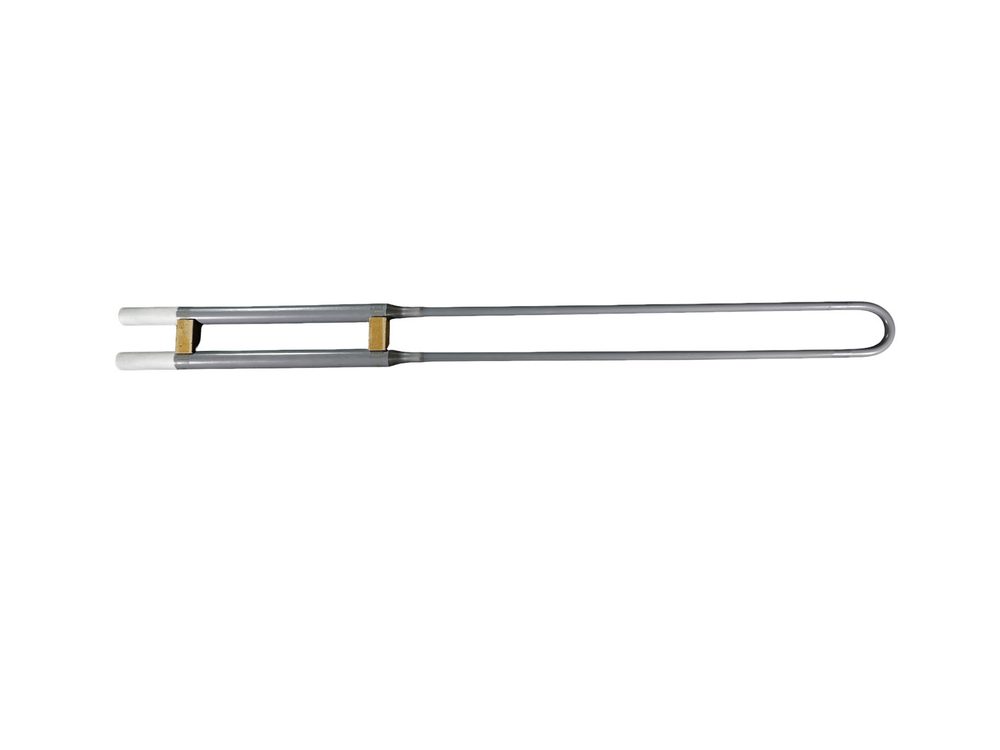
Ceramic products respond to the complete heating cycle, not only the final setpoint. Uneven radiant coverage can create temperature differences between the center and edges of a load, especially when shelves, setters, or dense product arrangements interrupt circulation. A suitable element layout places the active hot zone around the working area and leaves enough distance for safe loading and inspection.
The same MoSi2 heater can behave differently in two furnaces because chamber proportions, insulation, loading density, and element spacing change the thermal field. Before choosing a product, review the furnace height and width, the position of the load, the available sidewall or roof openings, and whether the elements can be arranged symmetrically around the sintering zone.
Element spacing should provide coverage without creating an excessively concentrated hot area. If the rods are too close to the load, radiant heating may become difficult to control and maintenance access may suffer. If they are too far away, the furnace may need longer heating or higher surface loading to reach the process condition. The useful target is a balanced relationship between element position and product placement.
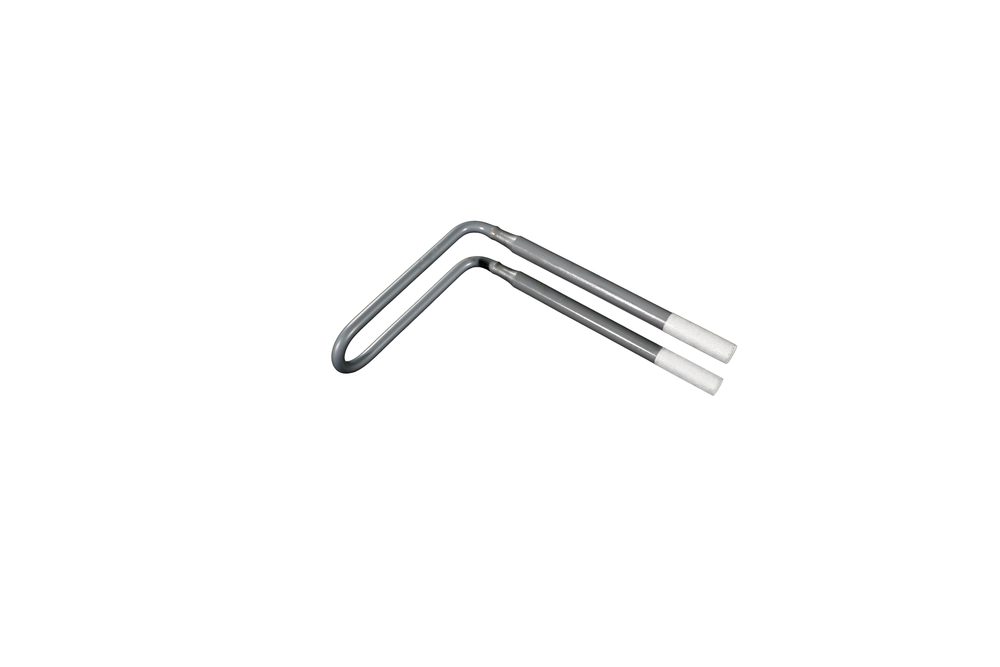
The hot zone should correspond to the height or length of the ceramic load rather than simply the overall chamber size. Keep the load clear of terminals and cold ends, and check that shelves or setters do not block the intended radiant path. These details are especially important in vertical furnaces, where U or W-shaped layouts may be selected to support centered heat coverage.
Songshan offers U, W, straight/X, L, round, spiral, and M-shaped MoSi2 heating elements. U and W forms can be useful for vertical or wider furnace layouts, while L, straight, round, spiral, and M shapes provide alternatives when the available openings, support positions, or heat-zone geometry are different. Shape selection should begin with the furnace drawing, not with a preference for one profile.
Songshan identifies 1700 and 1800 grades for MoSi2 heating elements. The appropriate grade depends on the furnace temperature, atmosphere, element arrangement, and process demands. Engineers should also confirm the diameter combination, hot-zone length, cold-end length, shank spacing, and terminal dimensions so the heater fits the existing supports and electrical layout.
MoSi2 elements are designed for high-temperature service, but low-temperature operation for long periods can create a different risk. The available product information identifies approximately 400–700°C as a range where pesting or powdering may occur during prolonged operation. A ceramic sintering schedule should therefore be reviewed as a complete curve, including startup, holding stages, cooling, and idle periods.
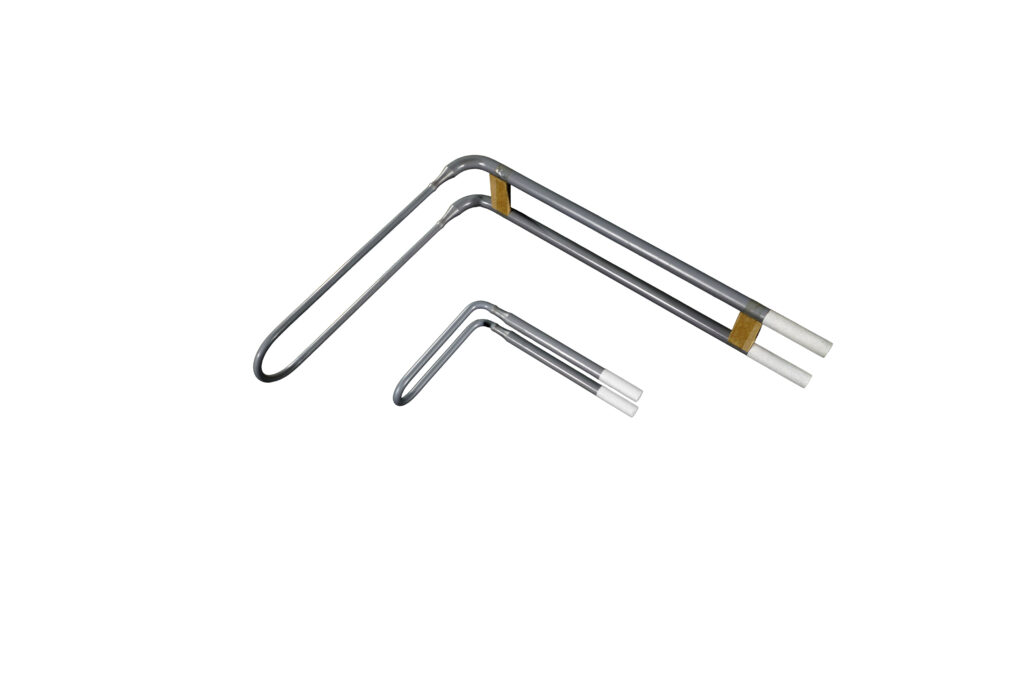
MoSi2 heating elements are ceramic-like and brittle at room temperature, so handling and installation require support at the correct points. A new or long-idle furnace should be dried before normal heating, and the voltage should be raised progressively during startup. These steps reduce avoidable mechanical and thermal stress before the protective surface layer is fully established.
Avoid impact, bending, or side loads when moving the elements into the furnace. Confirm that supports are aligned, the rods are not forced into position, and the terminals remain accessible for inspection. A small installation error can become a larger problem after thermal expansion, so clearances should be checked before the furnace is closed and energized.
Songshan MoSi2 heating elements can support ceramic sintering furnace projects where the heater shape, grade, dimensions, atmosphere, and temperature program must work together. The strongest selection process connects the product to the real furnace: the load size, heat-zone position, element spacing, installation access, and maintenance plan all matter. This is how a MoSi2 heater becomes part of a stable process rather than an isolated replacement component.
MoSi2 heating elements deliver their best value when the furnace design protects the hot zone, the element shape follows the chamber, and the operating curve respects the material’s behavior. For ceramic sintering, heat uniformity depends on more than the final temperature; it also depends on spacing, load position, startup, and maintenance. Contact Songshan to review MoSi2 heating elements against your ceramic furnace layout and process requirements.
A: MoSi2 heating elements are suitable for high-temperature ceramic sintering because they provide radiant heat and can form a protective silica layer in an oxidizing atmosphere. Their available shapes and grades also make them adaptable to different furnace layouts. The final choice still depends on temperature, chamber geometry, element spacing, and the heating cycle.
A: The suitable shape depends on the kiln opening, hot-zone length, support arrangement, terminal position, and load geometry. U and W forms may suit vertical or wider heating zones, while straight, L, round, spiral, and M forms can address other layouts. A furnace drawing is needed before confirming the best profile.
A: Prolonged operation around approximately 400–700°C can create a pesting risk for MoSi2 elements. The effect depends on the operating schedule and environment, so the full heating and idle pattern should be reviewed rather than focusing only on the peak temperature. A controlled schedule and suitable furnace management can reduce avoidable exposure.
A: Provide the furnace type, chamber dimensions, working temperature, atmosphere, element shape, hot-zone length, cold-end length, diameter, shank spacing, terminal position, voltage, and number of elements. Load size and heating-cycle details are also useful because they affect heat coverage and the practical arrangement of the ceramic kiln heating elements.
© Henan Zhengzhou Songshan Enterprise Group Co., Ltd