

Round and ring MoSi2 heating elements are useful when the furnace chamber or load has a circular relationship to the heat source. Their geometry can place active heating around a central area or along a curved boundary, but uniform heating still depends on spacing, hot-zone position, surface load, and electrical matching. Songshan lists round and ring forms within its MoSi2 range, alongside U, W, straight, L, spiral, and M shapes.
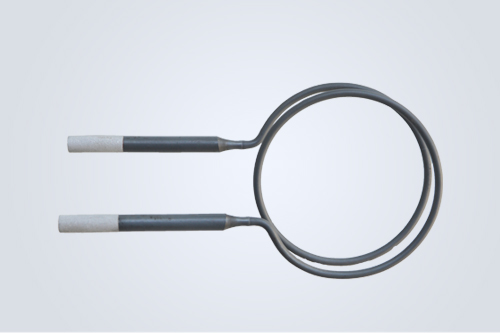
A round or ring element can follow a circular chamber, a cylindrical load, or a process area where heat needs to approach from more than one direction. Instead of concentrating the active zone along one straight line, the curved path can help distribute radiation around a central space when the furnace structure provides suitable clearance.The shape should be evaluated with the load envelope and the lining, not only with the outside diameter. A ring that is too close to the wall may transfer heat into the lining. A ring that is too far from the load may leave the center colder than the edge. The intended thermal path should be visible on the furnace drawing before the element is selected.
The hot zone must occupy the useful part of the chamber. Cold ends, holders, and electrical straps should remain outside the most intense radiation where possible. This separation protects the connection and helps the circular heating path do its work without creating a second local hot spot at the terminal area.For a batch furnace, review the position of the product at its fullest load. For a continuous or cylindrical process, review the path of the material and the areas where heat needs to enter or leave. The correct position can be more important than adding more elements.
MoSi2 element data should identify the diameter, hot-zone length, cold-end length, and any shape-specific spacing or connection dimension. For round and ring forms, the curved dimension must also be related to the furnace opening, holder, and installation sequence.Do not substitute a different diameter simply because it has a similar visual shape. Diameter changes the surface area, electrical resistance, mechanical clearance, and the distance between the active body and the surrounding structure. The selected element should fit the planned power and temperature conditions as a complete set.
The furnace circuit determines how each element receives power. If elements with different resistance values are placed together without a clear matching plan, one part of the circular arrangement may heat differently from another. That difference can appear as a temperature gradient across the load even when the controller shows a normal average temperature.Record the resistance of the installed set and compare new elements with the existing arrangement. A replacement should match the electrical role of the original element, not only its physical outline. The holder, strap, bus position, and wiring method should also be checked before the furnace is restarted.
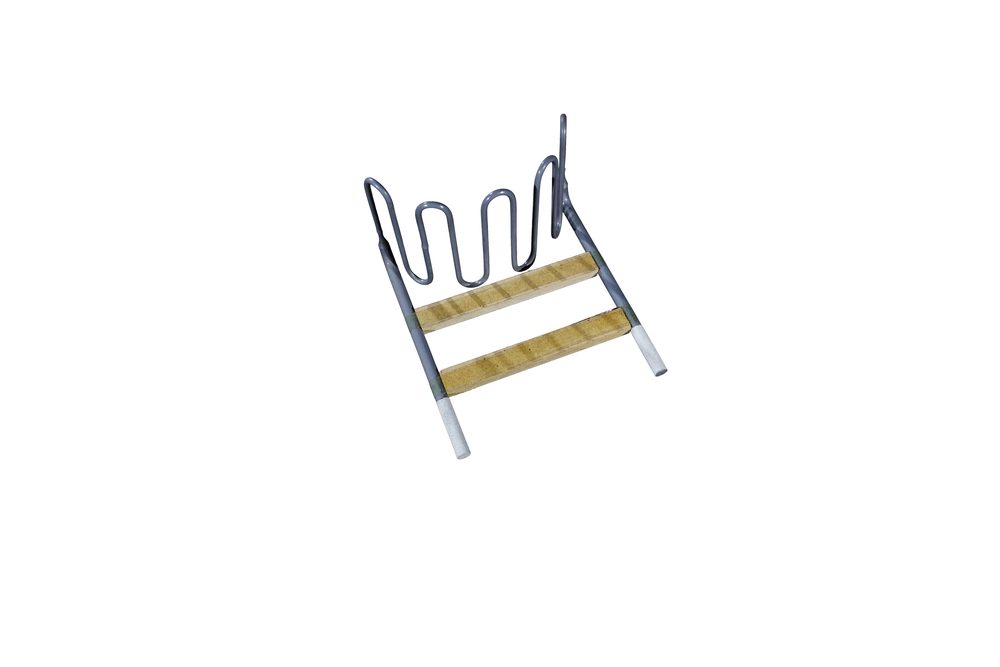
Round or ring elements make sense when the chamber is cylindrical, when the load is arranged around a central axis, or when a curved heating path offers better coverage than separate straight rods. They can also simplify a layout where the available support already follows a circular boundary.The choice becomes weaker when the furnace is long and rectangular, when the terminals must be reached from one side, or when a straight or L-shaped element would provide a cleaner path. Geometry should follow the installation reality rather than a preference for a particular product name.
U and W forms can provide multiple active legs in a compact area, while an L form can turn around a corner and keep the terminal route accessible. Straight forms can be easier to inspect and replace in long side-wall layouts. These alternatives are not automatically better, but they may use the available chamber space more efficiently.Compare the hot-zone coverage, cold-end access, holder design, resistance, and maintenance path for each candidate. A shape that requires less bending or fewer difficult connections may be the more stable choice even if its catalog description looks less specialized.
The surface load should follow the furnace temperature, atmosphere, element area, and intended service life. Excessive load can raise the element temperature and accelerate oxidation or damage. Insufficient load can leave the furnace below temperature or force the operator to extend the cycle.The ring or round shape should also have a clear view of the chamber. Avoid blocking the radiation with fixtures, dense loads, or misplaced insulation. Uniformity depends on the complete arrangement of heat sources and heat sinks, not on the element shape alone.
MoSi2 elements should be handled carefully while cold and brought up through the early temperature range in a controlled manner. A new or long-idle furnace should be dried before routine use. Avoid sudden voltage application, impact during loading, and long residence in an unsuitable lower-temperature condition.Inspect the ring or round element together with its holder and connection straps. A crack, shifted support, overheated terminal, or change in resistance can disturb the intended circular heat pattern before a complete failure becomes visible.
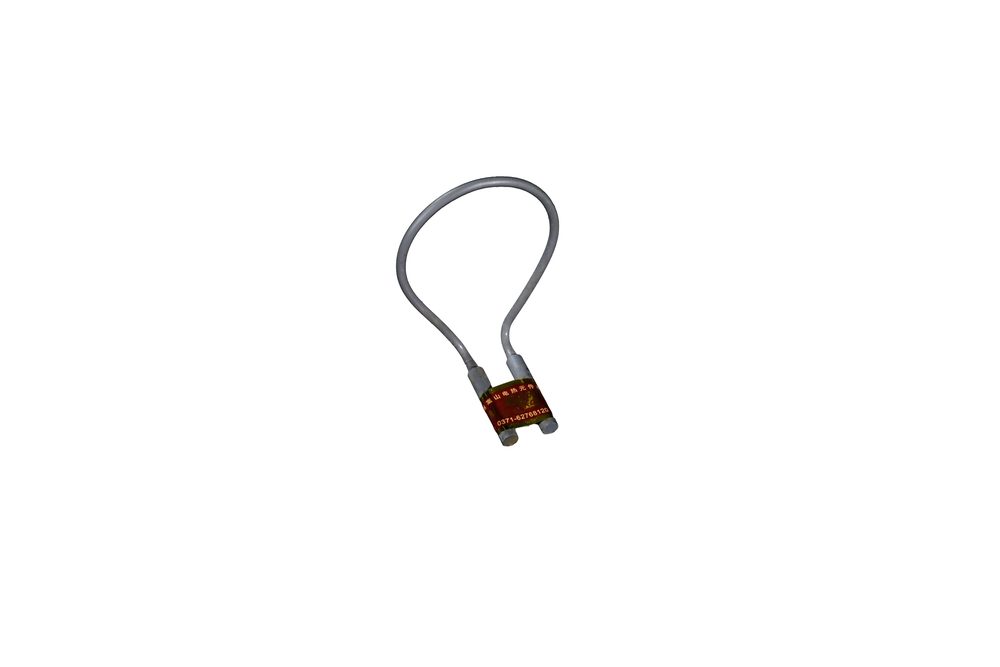
Songshan includes round and ring MoSi2 heating elements for furnace layouts where curved geometry can support the required heat coverage. When the furnace drawing allows several options, compare them with the Songshan MoSi2 range before finalizing the hot-zone and connection layout.
Round and ring MoSi2 heating elements are valuable when the furnace geometry calls for a curved thermal path around the load or chamber. Their performance depends on hot-zone placement, diameter, clearance, resistance matching, surface load, and controlled operation.
To connect a circular heating concept with a practical Songshan element arrangement, contact Songshan.
A: They are worth considering when the chamber or load has a circular geometry, when heat must approach a central area from multiple directions, or when the support structure follows a curved boundary. The final decision should also consider hot-zone position, terminal access, clearance, resistance, and the furnace cycle.
A: No. A ring shape can support useful heat coverage, but uniformity also depends on spacing, surface load, chamber insulation, load arrangement, electrical matching, and blocked radiation. A poorly positioned ring can still create hot or cold areas. The complete furnace layout should be checked before choosing the shape.
A: Provide the furnace geometry, load envelope, element diameter, hot-zone length, cold-end length, connection position, holder arrangement, resistance, voltage, current, atmosphere, and working cycle. For a ring shape, include the circular dimension and installation path so the element can be handled without mechanical stress.
A: Songshan lists round and ring forms within its MoSi2 heating element range. The shapes can be compared with U, W, L, straight, spiral, and M forms against the chamber drawing, heat coverage, electrical circuit, terminal access, and maintenance path. This keeps shape selection connected to the furnace rather than to appearance alone.
© Henan Zhengzhou Songshan Enterprise Group Co., Ltd