

MoSi2 heating elements work most predictably when their surface load is considered alongside furnace temperature, atmosphere, and element geometry. Surface load describes the heating power applied over the active hot-zone area; it is not a stand-alone rating that can be copied from one furnace to another. Matching it to the actual chamber and operating cycle helps manage heat stability and avoid unnecessary stress on the element.
A molybdenum disilicide heater radiates heat from its active section into the chamber. The element temperature and furnace temperature are related but are not identical, so the same surface load can produce different conditions in furnaces with different insulation, spacing, load size, and atmosphere.
If the active area is asked to deliver too much heat for the application, local temperature and service demands can rise. If the element is undersized or poorly positioned, the furnace may struggle to distribute heat across the load. Surface load selection therefore belongs in the furnace design conversation, together with power, hot-zone length, element count, and the arrangement of the work.
The hot-zone surface is the portion of the element intended to provide heat. Its length and diameter affect the available radiating area, while nearby walls, shelves, setters, and products affect how that heat reaches the load. When reviewing a drawing, mark the active hot zone, cold ends, supports, and load envelope together.
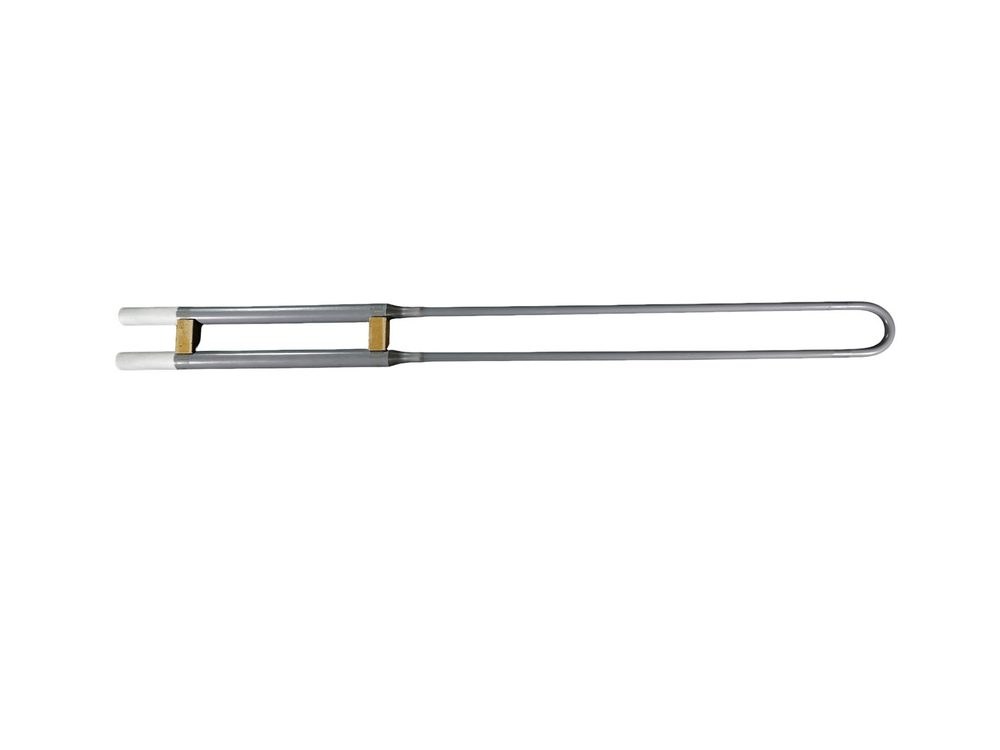
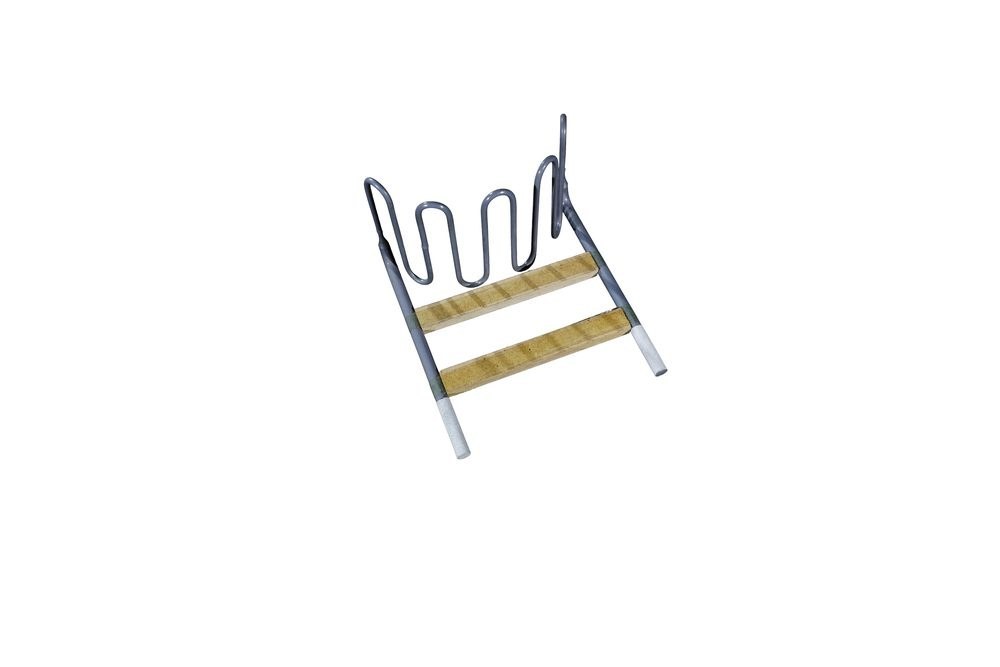
Songshan MoSi2 elements are offered in several geometries, including U, W, L, straight, round, ring, spiral, and M forms. A U configuration may suit a vertical chamber, while a curved or offset geometry may respond better to a circular load or a constrained opening. The Songshan U-type MoSi2 elements and round MoSi2 elements pages provide examples of product forms to compare with the furnace layout.
Begin with the required furnace temperature and the process atmosphere, then establish the element grade, surface area, electrical supply, and number of elements. The target is a workable relationship between heat demand and radiating area, not the highest possible element loading. Use the applicable Songshan specification or engineering calculation for the exact installation.
Songshan gives reference surface-load values that decrease as furnace temperature rises: below 18 W/cm² at 1400°C, below 15 W/cm² at 1500°C, below 12 W/cm² at 1600°C, below 10 W/cm² at 1650°C, and below 8 W/cm² at 1700°C. The final design should also account for whether radiation is obstructed, how much product is loaded, and how quickly the furnace must heat and recover. Shelves or dense loads can shadow parts of the chamber, while poor spacing can direct heat into the lining. If the furnace operates in a different atmosphere or outside the listed reference points, confirm the suitable operating conditions before setting a load target.
The peak setpoint does not describe the full duty. Startup, holding periods, cooling, idle time, and production interruptions all affect the element's thermal history. MoSi2 elements can be vulnerable to powdering during prolonged exposure around 400–700°C, so schedules that dwell in that interval deserve particular review.
When the process allows it, plan a controlled warm-up that passes through low-temperature exposure without an unnecessary extended hold. The exact ramp should follow the furnace and process requirements rather than a generic rate. Document long holds and repeated cycles so changes in element condition can be compared with the real schedule.
Songshan's product identifies 1700 and 1800 grade families. The appropriate grade depends on element temperature, atmosphere, geometry, and the intended duty. Do not infer the allowable furnace temperature from a grade name alone; verify the current product limits for the atmosphere and configuration.
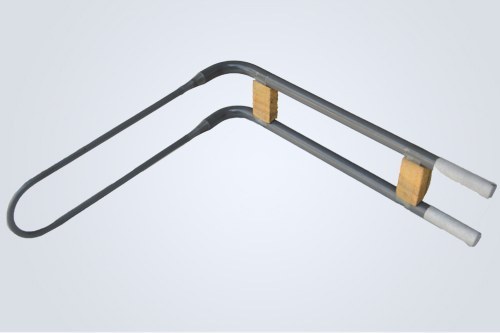
A U- or W-shaped element can organize a vertical heating section when the terminals are supported above the chamber. Round and ring shapes can follow a circular heating path, while L or spiral forms may address an offset or constrained opening. The shape should place its active section around the load without bringing cold ends into the hottest region.
Check the diameter combination, hot-zone length, cold-end length, shank spacing, bend geometry, and holder position before finalizing the element. These dimensions influence surface area, clearances, fit, and connection access. The MoSi2 element accessories can help identify supporting hardware, but the holder and straps must still match the selected element.
MoSi2 elements are brittle at room temperature, so they need careful handling when being installed. Avoid impact, bending, and side loads. Supports should hold the element in its intended position without forcing it against the furnace lining or the work.
In an oxidizing atmosphere, MoSi2 can form a protective silica-rich surface layer. This surface behavior supports high-temperature service, but it does not make the element immune to unsuitable atmosphere, excessive loading, contamination, or poor spacing. Confirm the atmosphere limits for the selected grade and avoid treating one furnace's results as a general guarantee.
Installation should leave enough clearance for the hot zone and provide practical access to the terminal side. The element should not be used as a structural support for shelves or the load. Check that the cold ends, holders, connection straps, and bus arrangement are positioned to limit unwanted radiant heating and allow inspection.
A newly built or long-idle furnace should be dried before normal operation. Raise power progressively during startup and observe current, temperature response, and the condition of the connection area. This gives operators time to identify an unexpected imbalance before the furnace reaches its process temperature.
If the furnace schedule includes prolonged low-temperature holds, repeated stops, or unusually slow ramps, review the program with the element supplier and furnace engineer. A suitable operating plan considers the element, controller, atmosphere, insulation, and process material together rather than changing one setting in isolation.
Songshan MoSi2 heating elements can be assessed for glass, ceramic, refractory, metallurgy, magnetic-material, and heat-treatment furnaces. Selection is strongest when the furnace drawing, temperature cycle, atmosphere, load position, and electrical design are reviewed as one package. This makes it possible to discuss grade and geometry without assuming that a particular shape or surface load fits every application.
For a design review, prepare the furnace temperature, atmosphere, operating schedule, chamber dimensions, load arrangement, available voltage, element count, hot-zone dimensions, and mounting direction. These details support a practical discussion of surface load and heat coverage.
MoSi2 heating elements support stable high-temperature operation when surface load reflects the real furnace rather than a generic target. Grade, atmosphere, active area, load placement, startup, and dwell time all influence the working conditions.
Explore Songshan MoSi2 heating elements when matching a heater to a specific chamber and process.
A: Surface load is the heating power applied over the element's active hot-zone area. It helps relate furnace demand to the element's radiating surface, but it is not a universal rating by itself. Furnace temperature, atmosphere, spacing, load arrangement, and element dimensions all affect the appropriate value.
A: Not necessarily. Songshan shows lower recommended surface-load values at higher furnace temperatures. The exact design still depends on the element grade, atmosphere, geometry, and whether radiation is obstructed. Confirm the relevant specification rather than extrapolating beyond its stated conditions.
A: The best shape is the one that puts the active zone around the work while fitting the chamber opening, supports, and terminal arrangement. U, W, straight, L, round, ring, spiral, and M forms address different layouts. Use the furnace drawing and load envelope to compare them.
A: Prolonged operation around 400–700°C can create a powdering or pesting risk for MoSi2 elements. Review the complete schedule, including startup, holds, idle periods, and cooling. Any change should remain compatible with the process material and furnace limits.
© Henan Zhengzhou Songshan Enterprise Group Co., Ltd