

2026-09-10
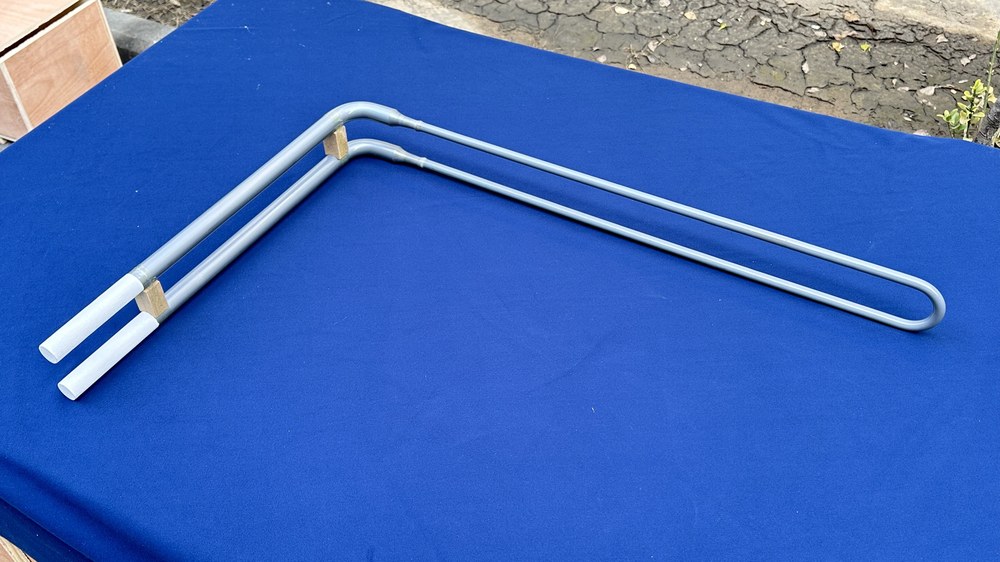
A mosi2 heating element is chosen for furnaces that need stable, intense heat at very high temperatures, especially in oxidizing atmospheres where molybdenum disilicide can form a protective silica film. The right selection depends on more than maximum temperature. Engineers also need to match grade, shape, surface load, atmosphere, mounting direction, and startup practice to the real furnace duty. Songshan offers several MoSi2 shapes for different chamber layouts.
MoSi2 is short for molybdenum disilicide, a material used in resistance heating elements for demanding furnace work. In an oxidizing atmosphere, the element surface forms a compact quartz glass layer, often described as a silica or SiO2 protective film. That layer helps prevent continuous oxidation of the inner material and is central to the way a mosi2 heater survives severe heat.
This behavior makes MoSi2 valuable in applications such as ceramic sintering, glass processing, metallurgy, refractory production, magnetic materials, heat treatment, and laboratory furnaces. The material is selected when the furnace environment allows the protective surface to form and remain effective.
MoSi2 heating elements are ceramic-like components, so they need a different handling mindset from metallic coils or structural parts. They are brittle at normal temperature but become more plastic at high temperature. That affects storage, installation, holder design, and the mechanical force allowed at the terminal area.
Under normal operating conditions, MoSi2 resistance is generally treated as stable over service time compared with aging-sensitive SiC elements. This can make maintenance planning easier because old and new MoSi2 elements may be used together in suitable situations. The advantage only holds when furnace design, atmosphere, and electrical control are aligned with the element.
A useful selection begins with the actual working temperature of the furnace, the highest element temperature expected, and the time spent at each stage of the cycle. Songshan MoSi2 products are presented around 1700 and 1800 grade choices, which gives engineers a practical starting point for high-temperature furnace planning. Because temperature language can vary by page and shape, a conservative specification should avoid overstating one universal limit.
The more important question is whether the furnace normally works in the range where MoSi2 performs well. Long exposure around 400-700°C should be treated with caution because low-temperature oxidation can lead to powdering. If the process must pass through that zone, the heating schedule and dwell time should be reviewed.
Atmosphere changes the practical temperature limit. Air, nitrogen, argon, helium, hydrogen, and mixed nitrogen-hydrogen atmospheres do not behave the same around MoSi2 elements. In oxidizing conditions, the silica film is a benefit; in reducing or reactive atmospheres, the same protective behavior may be weakened.
For a furnace designer, atmosphere should include gas composition, process vapors, humidity, flow, pressure, and how often the chamber is opened. A mosi2 heating element manufacturer can only give meaningful shape and grade advice when these operating details are clear.
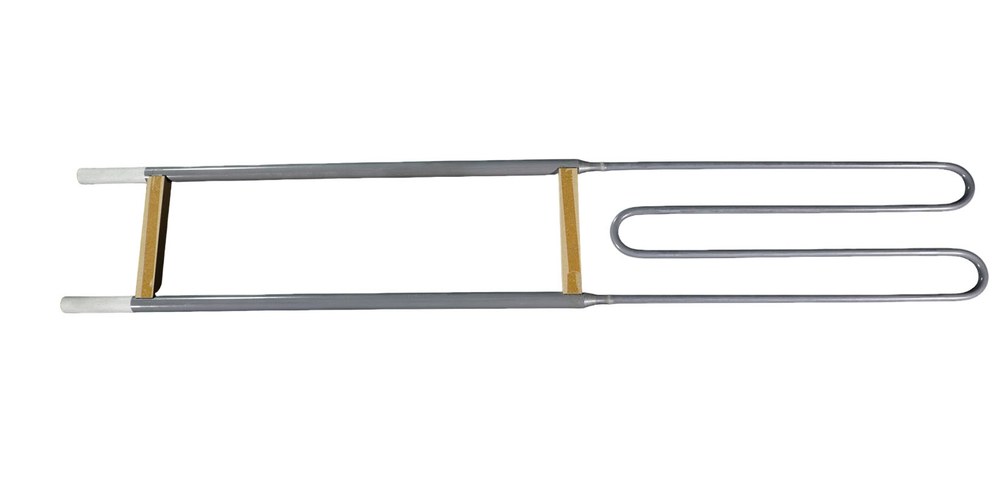
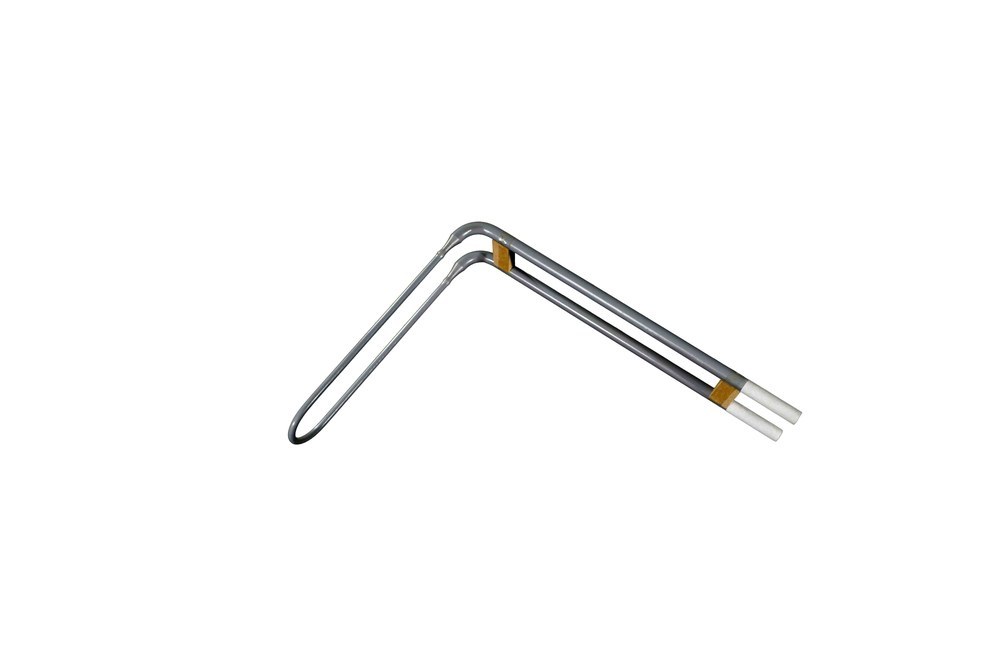
MoSi2 element shape is not decoration. Songshan products include U shape, W shape, straight or X shape, bend or L shape, round shape, spiral shape, and M shape options. Each form places the hot zone, cold ends, and terminals in a different relationship to the furnace wall, insulation, and heated load.
A U shape MoSi2 heating element is commonly considered for vertical hanging from the furnace roof, especially where the U-bend forms the hot section inside the chamber. W and multi-bend forms can distribute radiant heat across wider or more specific zones. Round and spiral forms may suit geometry that needs a compact heating path.
Selection drawings should identify diameter, hot zone length, cold end length, and shank spacing. Songshan uses D1/D2 for diameter, Le for hot zone length, Lu for cold end length, and A for shank spacing. Available diameter combinations include 3/6, 4/9, 5/10, 6/10, 6/12, 6/14, 7/14, 8/16, 9/18, and 12/24 mm.
Those numbers should not be dropped into a furnace blindly. A long hot zone can improve coverage, but it must fit the chamber without touching insulation or the load. Cold ends must remain in the correct position for electrical connection and thermal protection.
Surface load links the element hot-zone area to applied electrical power. If the surface load is too high, the element can run hotter than expected and age or fail prematurely. If it is too low, the furnace may heat slowly or fail to reach a stable working temperature.
Practical MoSi2 surface-load guidance declines as furnace temperature rises. Reference values include below 18 W/cm2 at 1400°C, 15 W/cm2 at 1500°C, 12 W/cm2 at 1600°C, 10 W/cm2 at 1650°C, and 8 W/cm2 at 1700°C. The useful lesson is simple: hotter furnaces need more conservative loading.
Surface load cannot be separated from insulation, chamber volume, element spacing, heating rate, load mass, and whether the furnace runs continuously or in batches. A mosi2 heater supplier should ask for furnace drawings and operating conditions before finalizing a recommendation. The goal is stable heat without overstressing the element.
For continuous furnaces, uniformity and element position may matter as much as peak temperature. For laboratory furnaces, compact chamber geometry and frequent cycling can become the larger concern. The same mosi2 heating element can perform differently when one furnace keeps a steady thermal profile and another opens repeatedly.
Because MoSi2 is brittle at room temperature, installation damage is a real risk. U-shaped elements are often hung vertically from the furnace top by the element holder so the hot end does not carry unwanted mechanical load. The holder supports the element and sets its position, so small misalignment can become a service-life issue.
The hot zone should not be forced against furnace brick, insulation, or the heated material. The tapered transition area also needs proper placement so local overheating is avoided. When Songshan is considered for a new furnace or replacement element, the drawing should show dimensions, support, and connection method.
MoSi2 accessories include holders and aluminum braid connecting straps. The connection should not create a rigid mechanical pull on the element, and the clamp area should remain protected from excessive heat. Tightening too aggressively at room temperature can introduce stress before the element reaches a more forgiving high-temperature state.
Startup also matters. New furnaces or furnaces that have been idle should be dried before operation, and voltage should be raised gradually rather than applied at full load immediately. This protects the heating element, the electrical system, and the furnace lining during the first thermal cycle.
A mosi2 heating element delivers its value when material, atmosphere, geometry, surface load, and installation practice work together. It is especially useful for high-temperature furnace applications where the protective silica film can support stable operation, but it still requires careful handling and realistic thermal design.
Songshan gives engineers a practical MoSi2 product range with multiple shapes and grade choices, making it possible to match the element to the furnace rather than forcing the furnace around a generic heater.
Contact Songshan to align the element shape, grade, and dimensions with your furnace conditions.
A: Its main advantage is high-temperature performance in suitable oxidizing atmospheres. The molybdenum disilicide surface can form a compact silica film that helps slow further oxidation. This makes MoSi2 attractive for ceramic sintering, glass processing, metallurgy, refractory materials, laboratory furnaces, and other processes needing intense, stable heat.
A: Long operation in this lower temperature range can cause low-temperature oxidation and powdering. The risk does not mean every heat-up through this zone is unsafe, but extended dwell time should be avoided where possible. Furnace drying, startup control, and process scheduling should consider this behavior during element selection.
A: Shape depends on chamber layout, mounting direction, hot-zone coverage, terminal location, and heat distribution. Songshan offers forms such as U, W, L, round, spiral, straight/X, and M shapes. U-shaped elements often suit vertical hanging, while W or multi-bend elements may help distribute heat across wider furnace zones.
A: Provide the working temperature, maximum temperature, atmosphere, chamber dimensions, heating cycle, power supply, controller type, installation direction, hot zone length, cold end length, spacing, and terminal clearance. Existing element photos and failure symptoms are also useful because they reveal mechanical stress, atmosphere issues, or surface-load problems.
© Henan Zhengzhou Songshan Enterprise Group Co., Ltd