

Procurement teams and furnace engineers often face a key knowledge gap when choosing high-temperature heating components. They tend to focus too much on the first price or the highest temperature rating. This leaves out two basic factors: the material density and the quality of recrystallization in the SiC rod. The result is a common problem: early aging. In industrial heating, aging means the electrical resistance rises quickly because of internal oxidation. This makes the system less efficient or unable to reach the needed temperature. When a company picks a weak supplier, it often sees uneven heat and repeated stops for element changes. To move past these issues, a partner must use high-purity materials and better sintering methods. Songshan solves these problems by making parts that stay stable and last longer.
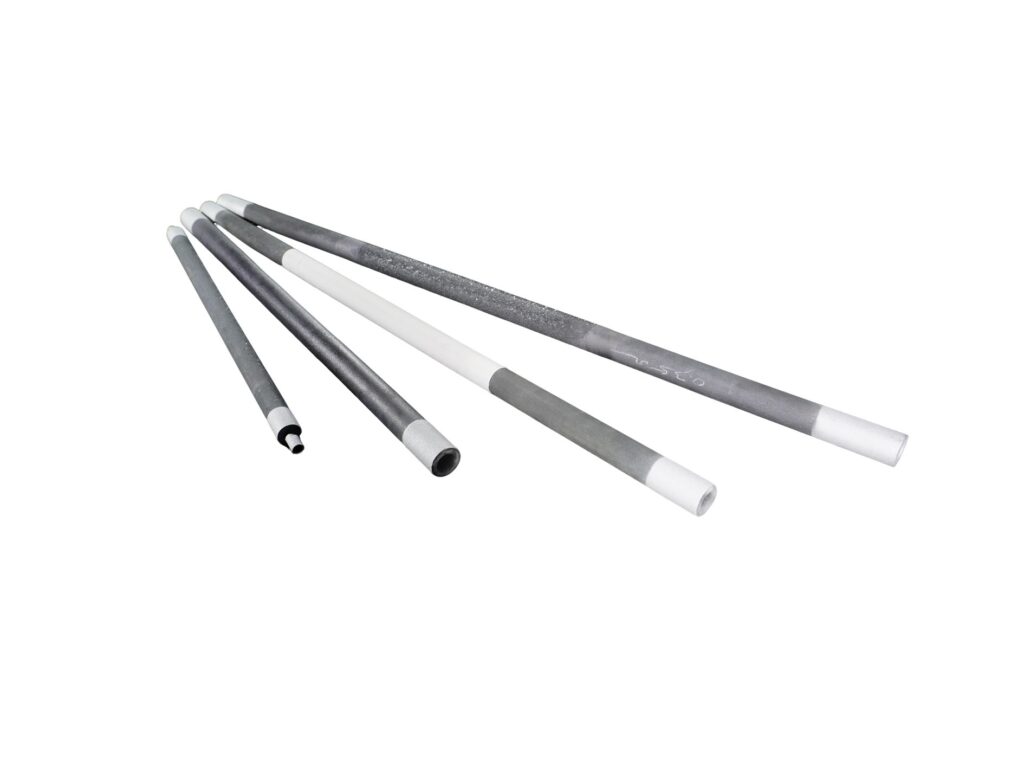
Songshan started in 1980. It has become one of the three largest makers of high-temperature heating elements in the world. As a Chinese silicon carbide rod factory, the company controls the full production process. This process begins with raw material choice and ends with final sintering at high temperature. Its quality system meets the ISO 9001:2000 standard. The company holds a large share of the domestic market. It also sends products to more than 40 countries. Songshan is known for its skill and for giving full support on difficult thermal projects. The company keeps investing in research so that every high-temperature silicon carbide rod for high-temperature furnaces meets the needs of today’s industrial work.
To tell a good element from a basic one, buyers must look at the core steps in production. A strong silicon carbide heating element starts with high-purity green hexagonal silicon carbide. The material then goes through a careful recrystallization step at temperatures above 2200°C. This step creates a solid bridge between the SiC particles. The bridge improves both mechanical strength and electrical conductivity. Most good elements show a volume density of 2.6 to 2.8 g/cm³ and a porosity rate below 20%. This level of density protects the inside of the rod from oxygen. It keeps the rise in resistance low. Therefore, these high-density elements last 1.5 to 2 times longer than normal ones.
A strong SiC rod raises the efficiency and quality of industrial kilns. It offers better thermal radiation and strong resistance to acid corrosion. Metal elements often deform or oxidize quickly at extreme heat. In contrast, these non-metallic elements stay stable at 1450°C and reach 1600°C in some models. The company also designs cold ends carefully. This design keeps the heat-zone resistance and cold-end resistance in good balance. The balance prevents terminal overheating and protects the furnace body from thermal damage. At the same time, it cuts energy use. The ability to keep resistance steady at high temperatures gives more precise control. This control is useful for sintering high-grade ceramics, magnetic materials, and semiconductor parts.
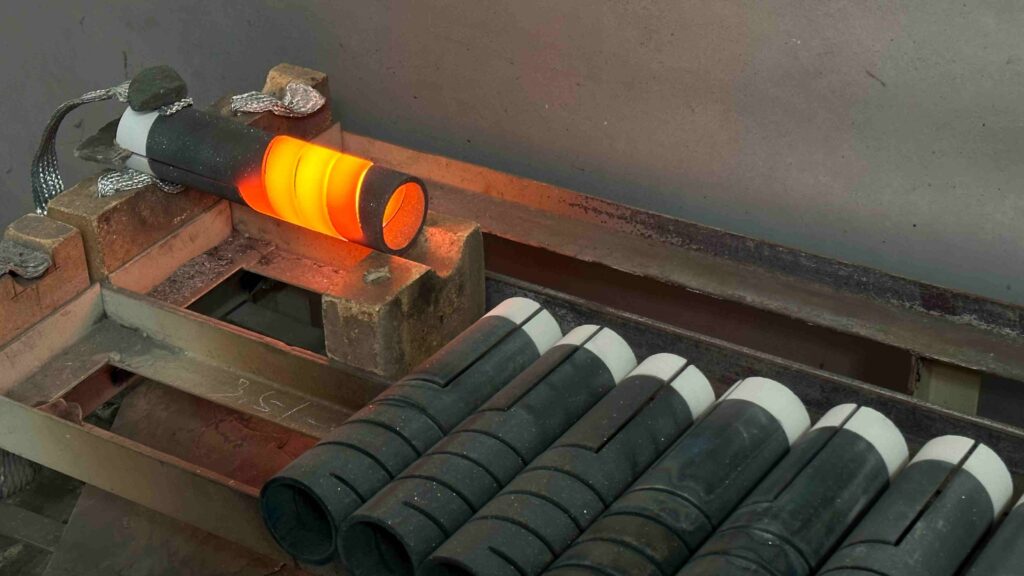
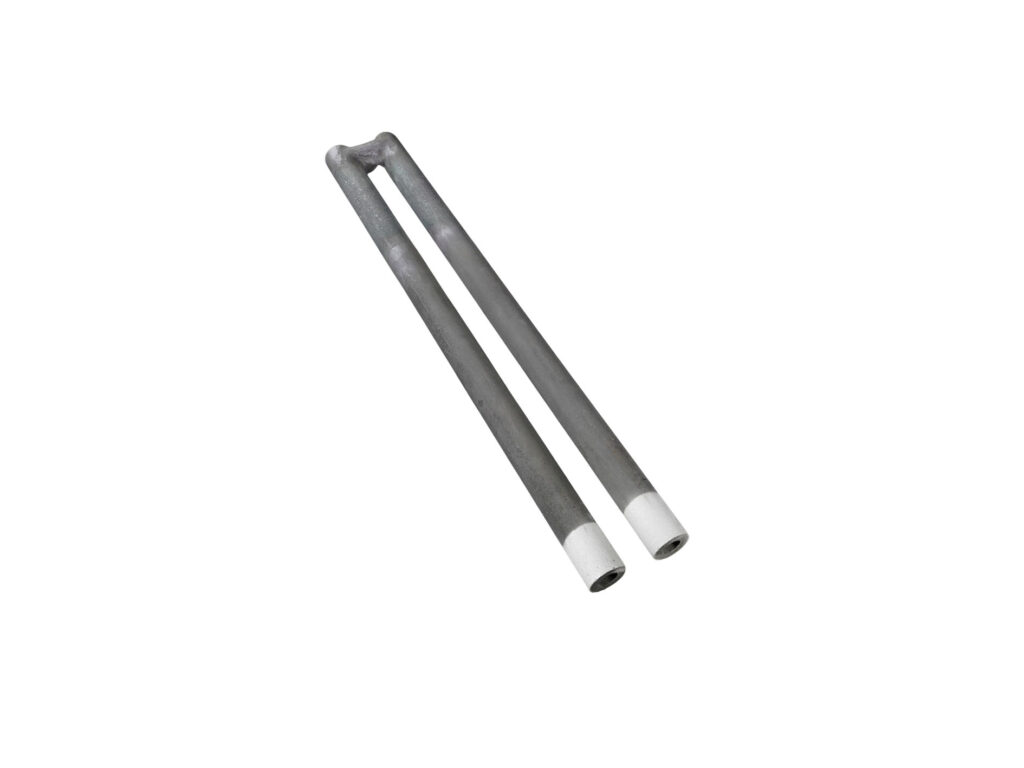
When looking for a partner for large runs, brand owners must check the supplier’s quality control and its ability to adapt to different needs. A reliable China silicon carbide rod factory must test resistance before shipping. To keep the temperature uniform, the resistance spread in one set should stay under ±5%. Songshan uses precise tools to measure resistance at about 1050°C. This practice ensures that clients receive matched sets for their exact voltage needs. The company also offers many shapes. These shapes include ED straight rods, U-type rods, W-type rods, and spiral forms. They fit different furnace designs. Packaging also shows reliability. For bulk orders, each element is wrapped in foam and placed in strong wood cases. This protects the brittle material during shipping.
The value of strong silicon carbide heating elements shows up clearly in day-to-day production. A powder-metallurgy plant reported big gains after switching to Songshan products. Before the switch, the facility suffered frequent failures from thermal shock and uneven aging. After it adopted high-density recrystallized rods and used a mix of series and parallel wiring, the plant achieved balanced electrical loads and steady sintering conditions. The change cut downtime by 40%. It also raised the structural quality of the metallurgical parts. This experience shows that choosing a supplier who knows the link between surface load and furnace atmosphere is important.
The life span of a high-temperature silicon carbide rod for high-temperature furnaces depends on how it is installed and run. Reliable suppliers supply clear limits on surface load. Going beyond these limits speeds up aging. It is also important to make installation holes 1.4 to 1.6 times wider than the cold-end diameter. This size allows free thermal expansion. During the first start-up or after a long stop, using old rods for drying helps protect new elements from water vapor. By following these rules and choosing suppliers who supply aluminum-metallized ends for secure connections, brand owners can get a long return on their investment.
Choosing the right heating elements is a strategic choice that touches the whole production chain. By focusing on high-purity materials, high-density recrystallization, and matched resistance values, companies can avoid early aging and poor heating. Songshan continues to lead in providing technical solutions and high-quality components for extreme heat work. We invite brand owners and furnace engineers to talk with our technical team. They can find the heating solutions that fit their exact industrial needs. Contact us today to learn how our engineering skills can raise your thermal processing efficiency and product quality.
A: Standard elements work stably at 1450°C. High-performance models reach 1600°C in oxidizing atmospheres.
A: An element reaches the end of its life when its resistance climbs to four times its first value.
A: Matching resistance under a ±5% range ensures each element draws power evenly. This prevents local overheating and delivers uniform temperatures.
A: The company offers ED straight rods, U-type rods, W-type rods, and both single and double spiral types.
A: They are best for oxidizing atmospheres. They can also be used in other settings; however, the maximum temperature and surface load may need to be changed.
© Henan Zhengzhou Songshan Enterprise Group Co., Ltd