

2026-10-02
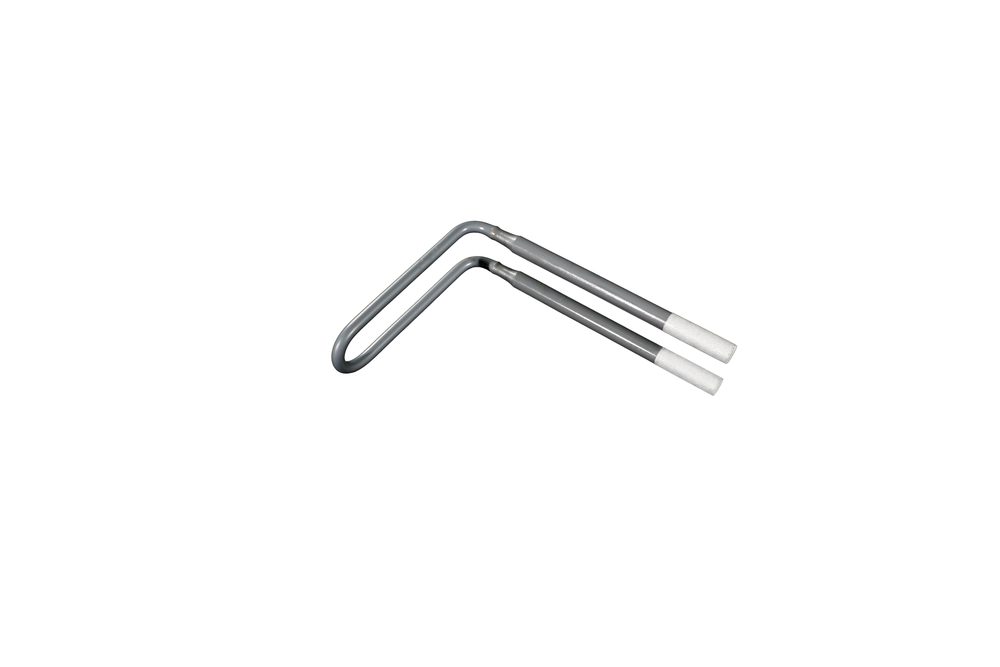
L-type MoSi2 heating elements help compact furnaces place an active hot zone around a chamber boundary, corner, or restricted access path. The bend can solve a geometry problem that a straight element cannot, but the element still has to be specified by grade, diameter, hot-zone length, cold-end length, and shank spacing. Songshan lists L-bent MoSi2 elements within a broader range of U, W, straight, round, spiral, and M forms for high-temperature furnace applications.
A compact furnace often has limited room for both the heated section and the electrical connection. An L-shaped MoSi2 heating element can place the hot zone along one direction while turning the cold ends toward a more accessible support or terminal area. This can help the designer use available space without moving the terminals into the hottest part of the chamber. The bend should be treated as a functional part of the layout, not as decoration. Its position affects radiant coverage, the distance from the load, the location of the furnace opening, and the way the holder carries the element. A small change in bend orientation can shift heat toward a wall or away from the useful load envelope.
MoSi2 heating elements use a hot section and colder ends for electrical connection. In a compact chamber, the cold-end length and shank spacing must leave enough room for the holder, connecting strap, and inspection access. The terminal should not be placed where radiant heat can overheat the clamp or connection wire. Before choosing an L-type element, mark the chamber opening, brickwork, support position, terminal route, and the maximum envelope of the heated material. This makes it easier to confirm that the bent element can be installed without twisting or forcing the ceramic body.
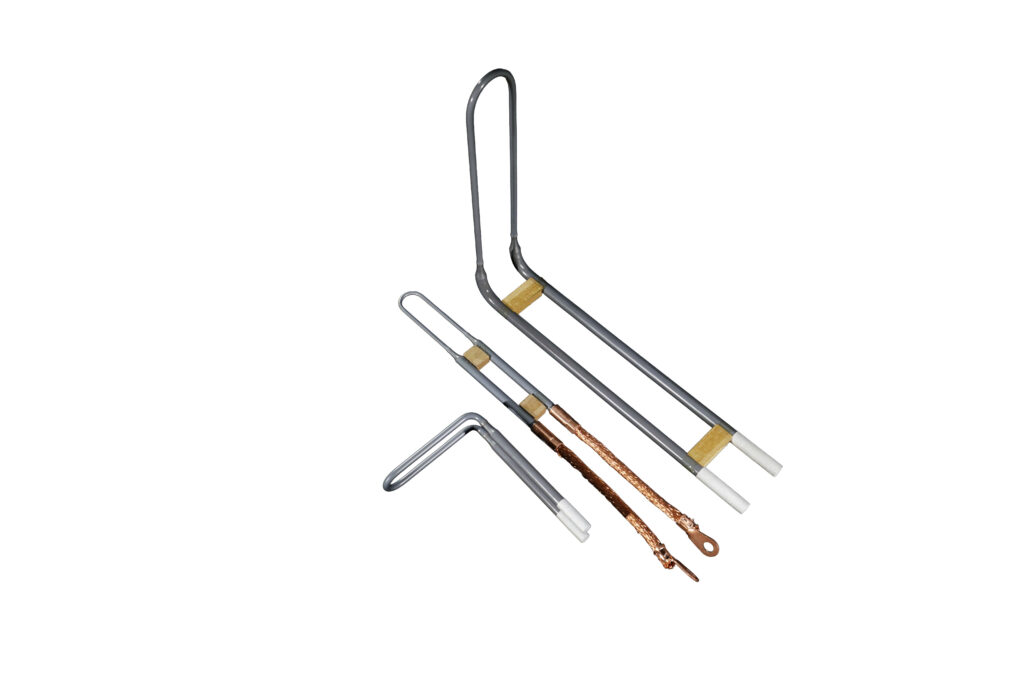
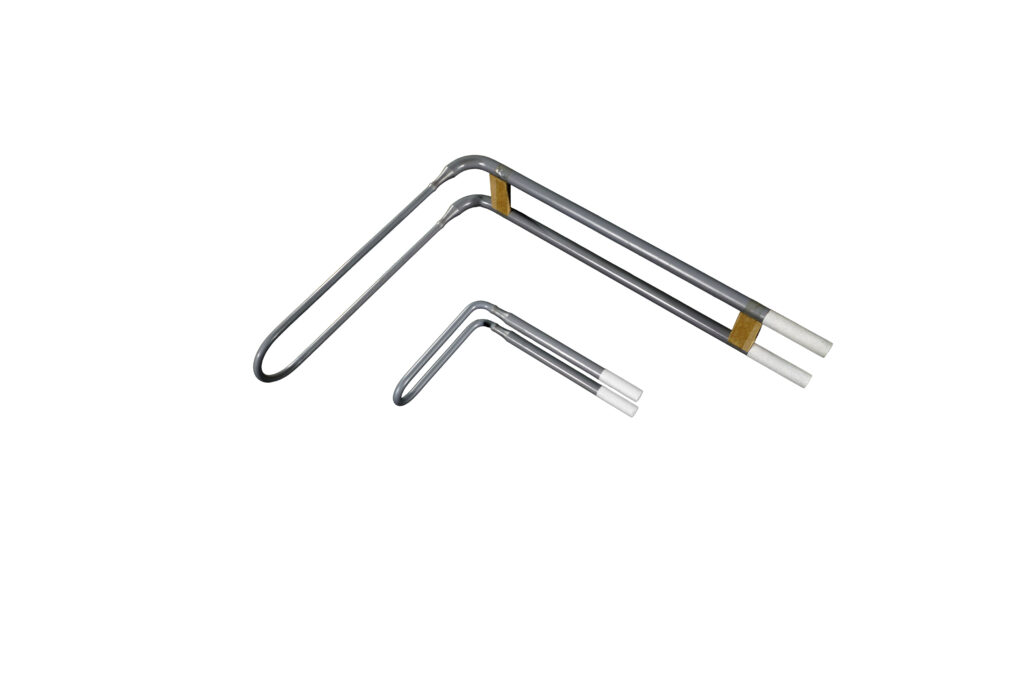
The main dimension fields for a MoSi2 element include material grade, D1/D2 diameter, hot-zone length, cold-end length, and shank spacing. For an L shape, those fields describe both the electrical path and the physical reach of the element. The selected hot-zone length should cover the required heating area without extending into the terminal region. The diameter also affects the electrical resistance and the mechanical behavior of the element. A larger or smaller diameter is not a simple substitute when the furnace power, holder, and opening have already been designed. The element specification should be checked against the existing drawing and the available controller range.
MoSi2 elements are used in oxidizing high-temperature applications because a protective oxide layer forms on the surface. The process still matters. Long residence at lower temperatures, repeated thermal cycling, contaminants from the charge, and poor ventilation can affect the element differently from a stable high-temperature cycle. Describe the working atmosphere, heating rate, holding time, cooling pattern, and material being processed before final selection. These conditions determine whether an L-type MoSi2 element is the right answer or whether another shape and material would give a more practical heat path.
MoSi2 is a ceramic-like material and is brittle at normal temperature. During installation, support the element by its intended holder and keep the bend from striking the brickwork. Do not use the cold ends to pull the hot section into alignment, and do not clamp the body so tightly that thermal expansion is blocked. The holder determines the position of the element and carries its weight. A stable holder should keep the hot zone centered, maintain the planned clearance, and leave the cold ends at the intended connection height.
Songshan MoSi2 element accessories include holders and aluminum braid connecting straps. The strap should reach the bus without pulling the element sideways. The connection must remain secure while allowing the element to respond to temperature, because a rigid lead arrangement can transfer mechanical stress into the ceramic. Keep the clip and wire away from excessive radiation. Check that the contact area is clean, the strap is not over-tightened while cold, and the connection does not become a local heat source during the first heating cycle.
A new or long-idle furnace should be dried before the L-type elements are taken into normal service. Use a controlled voltage rise and allow the furnace to move through the early temperature range without a sudden electrical impulse. The operator should monitor temperature response, current, connection temperature, and any sign of local overheating. Long exposure in the lower temperature range can be harmful to MoSi2 elements because oxidation behavior is intensified there. The operating schedule should therefore be planned around the real process rather than leaving the furnace at an unsuitable low temperature for extended periods.
An L-type MoSi2 heating element earns its place when the furnace geometry needs a controlled bend, accessible terminals, and a hot zone that can reach the useful chamber area without mechanical interference. Careful dimension matching, holder support, strap positioning, and startup control protect both heat coverage and element integrity.
For help relating an L-type element to a compact furnace drawing, contact Songshan.
A: L-type MoSi2 heating elements are used when a furnace needs a bent heating path around a chamber boundary, corner, or restricted installation area. The bend can separate the hot zone from the terminal route, but the element must still match the furnace dimensions, atmosphere, electrical load, and required heat coverage.
A: Check material grade, D1/D2 diameter, hot-zone length, cold-end length, and shank spacing. Also confirm the bend orientation, holder position, terminal route, furnace opening, and clearance from the load and lining. The complete geometry matters because the bend changes how the element occupies the chamber.
A: MoSi2 elements behave like ceramic products at normal temperature, so impact, twisting, and concentrated clamping force can cause breakage. Use the correct holder, support the element during handling, keep it clear of the brickwork, and avoid pulling the hot section into alignment through the electrical leads.
A: Songshan lists L-type within a broader MoSi2 range that includes several furnace geometries. Selection can be related to the chamber drawing, hot-zone coverage, cold-end access, holder position, electrical connection, atmosphere, and startup method instead of choosing the bend in isolation.
© Henan Zhengzhou Songshan Enterprise Group Co., Ltd