

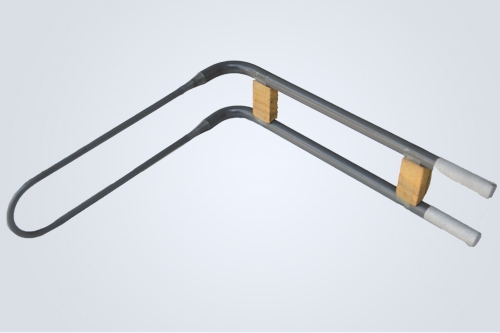
The survival of ultra-high temperature industrial processes relies on components capable of withstanding extreme thermal environments. Among these, the MoSi2 heating element stands out as a critical innovation, capable of operating at temperatures up to 1800°C in oxidizing atmospheres. This material creates its own protective "armor" through the formation of a quartz glass film, ensuring longevity where other metals would fail. Understanding the journey from raw molybdenum disilicide powder to high-performance industrial power requires a look inside the specialized facilities of a premier MoSi2 heating element manufacturer.
Industrial progress in ceramics, glass melting, and semiconductor processing demands heat sources that are both stable and incredibly powerful. The MoSi2 heating element fulfills this role by utilizing the unique properties of molybdenum disilicide, a metal silicide produced through sophisticated powder metallurgy. Songshan, a leading name in this field since 1980, has spent over forty years refining these materials to meet the rigorous standards of global markets.
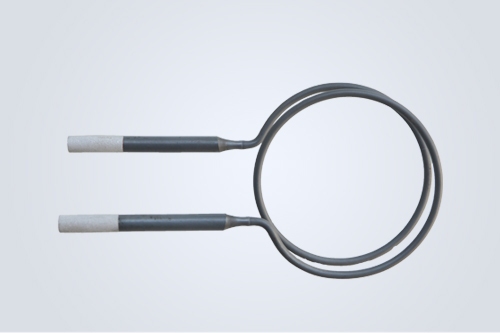
The transition from raw powder to a finished heating component is a complex process involving high-temperature sintering and metallurgical expertise. As a global MoSi2 heating element manufacturer, Songshan follows ISO9001 standards to ensure every unit meets international quality benchmarks
The core of the manufacturing process involves:
Selection of high-purity molybdenum disilicide raw materials with purity levels exceeding 99%.
Forming of the element structure, which consists of a heating part (hot zone), a cold end, and connecting parts.
High-temperature sintering to densify the matrix, reducing porosity to approximately 7.4%.
Careful control of grain size to ensure a bending strength of 15-25kg/cm², providing the necessary mechanical resistance for industrial handling.
One of the most critical stages in production is the welding of the hot zone to the cold end. Defects in this area, such as partial incomplete welds or weld cracks, are common causes of failure in lower-quality products. Songshan utilizes advanced welding processes to prevent the "bubbling" phenomenon, where the glass phase overflows from the matrix due to localized overheating. By ensuring the base material of the welded part remains undamaged, the service life of the element is significantly extended.
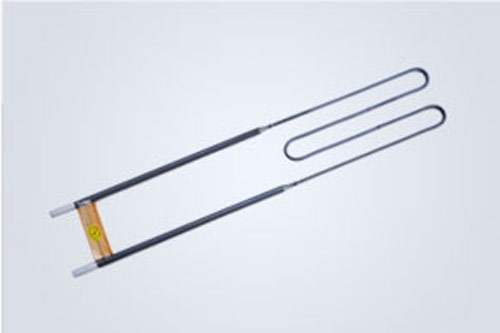
Not all heating elements provide the same level of protection or performance. The chemical properties of the material dictate how it interacts with the furnace atmosphere.
When a MoSi2 heating element operates at high temperatures in an oxidizing atmosphere, a compact layer of quartz (SiO2) protective film forms on its surface. This film acts as a barrier against further oxidation. If the film is damaged, it possesses a "self-healing" capability where the protective layer forms again during continuous use. However, if temperatures exceed 1700°C, the SiO2 film begins to fuse, which can lead to the loss of its protective abilities if not managed correctly.
A catastrophic phenomenon known as "pesting" or low-temperature oxidation pulverization occurs between 400°C and 700°C. In this specific range, an effective SiO2 film cannot form, allowing oxygen to penetrate grain boundaries and cause the material to shatter. A professional MoSi2 heating element manufacturer optimizes the material formula and instructs users to pass through this temperature range quickly during the furnace startup to avoid component failure.
Choosing a reliable MoSi2 heater supplier involves evaluating historical performance and customization capabilities. Songshan's legacy includes serving major international markets, including the U.S.A., Germany, and Japan, while holding a 70% share of the domestic market.
Furnace designs vary greatly, necessitating a wide range of component shapes:
U-Shape: The most common configuration, often hung vertically to avoid mechanical stress.
W-Shape: Used for three-phase power applications or specific furnace geometries.
L-Shape and Multi-bend: Customized for laboratory furnaces or complex industrial heating chambers.
Specific dimensions like hot zone length (Le) and cold end length (Lu) are meticulously calculated to match the furnace's thermal requirements.
The engineering excellence behind the MoSi2 heating element reflects a fusion of powder metallurgy precision and deep industrial experience. From the careful management of impurity levels like iron to the perfection of hot-to-cold end welding, every step in the factory of a leading MoSi2 heating element manufacturer like Songshan is designed to empower high-temperature industries. By selecting a high-quality component and adhering to expert maintenance protocols, industrial operators can achieve stable, efficient, and long-lasting thermal performance.
To optimize your furnace performance with professional heating solutions, please contact us at [email protected].
A: A high-quality MoSi2 heating element from Songshan gives more than 3000 hours of steady use when the air contains oxygen. In a vacuum or in an inert gas the same element can reach 5000 hours. Operators achieve this longer life when they keep up with regular checks and cleaning.
A: Failure between 400°C and 700°C is caused by "pesting," a form of low-temperature oxidation where a protective SiO2 film cannot form. Songshan improves material density to reduce this problem, but users still need to move through this temperature range quickly during startup.
A: Yes, because the resistivity of a MoSi2 heating element does not change much with use, unlike silicon carbide. New and old elements can therefore be used together in the same circuit without causing electrical imbalance.
A: As a premier MoSi2 heating element manufacturer, Songshan uses special welding methods to avoid defects such as core voids or incomplete welds. This stops the bubbling effect and localized overheating that often lead to early failure.
A: A reliable MoSi2 heater supplier like Songshan recommends surface loads based on furnace temperature. For example, the load should stay below 18 W/cm² at 1400°C. It should drop to below 8 W/cm² when the furnace reaches 1700°C. Following these values helps the element last longer.
© Henan Zhengzhou Songshan Enterprise Group Co., Ltd