

MoSi2 heating elements last longer in oxidizing furnaces when the furnace warms up gradually, the hot zone stays clear, and the terminals stay protected from unnecessary heat. Songshan offers several MoSi2 forms and grade choices, so the practical answer is to match the element to the furnace duty instead of treating every replacement as interchangeable.
The first question is not simply how hot the furnace can become. It is how the chamber runs through a complete cycle, how often it starts and stops, where the load sits, and whether the atmosphere allows the element to operate as intended. Those details shape service life more than a single headline temperature.
MoSi2 is molybdenum disilicide, a material used for resistance heating in demanding high-temperature equipment. In a suitable oxidizing atmosphere, the surface can form a protective silica layer that helps shield the material beneath it. That behavior is central to why MoSi2 heating elements are used in ceramic, glass, refractory, metallurgy, laboratory, and other high-temperature furnace applications.
The protective effect does not remove the need for good furnace practice. A stable chamber, controlled heating schedule, and sensible clearance allow the element to work within the conditions for which it was selected. When those conditions drift, the element may still heat, but its service life can become much less predictable.
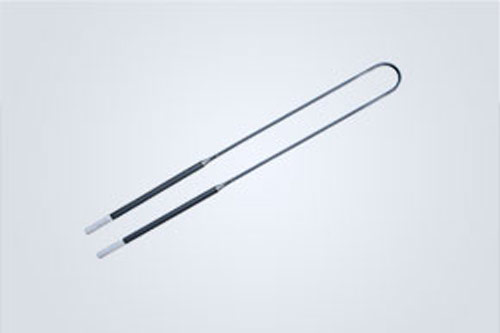
Songshan presents 1700 grade and 1800 grade MoSi2 options. The appropriate choice depends on the furnace's working range, the highest element temperature, cycle frequency, and atmosphere rather than on the grade name alone. A furnace that operates close to its upper limit deserves a more conservative engineering review than a system with a stable, moderate duty cycle.
It is also important to distinguish furnace temperature from element temperature. The element can run hotter than the load or the chamber reading suggests because it is the active radiant source. That is why grade, surface loading, spacing, insulation, and controller behavior need to be considered together.
Early failure often begins during startup. A cold furnace that is driven immediately toward full output can expose the element, holders, lining, and electrical connections to abrupt changes at the same time. The risk is higher after a long idle period, after chamber maintenance, or when moisture has not been removed from the furnace.
A controlled ramp gives the element time to expand and settle into its operating condition. It also gives the insulation and supports time to respond without creating unnecessary force at the cold ends. The goal is not to make every cycle slow; it is to avoid a harsh start that repeatedly consumes the element's mechanical margin.
Dust, process vapors, splashes, and deposits can change the way heat leaves the hot zone. A contaminated chamber may create local hot spots or block the intended radiant path. Uneven loading can have a similar effect by forcing one side of the furnace to work harder than the rest.
These problems are easy to miss because the furnace may still reach its setpoint. The first symptoms may be uneven product quality, longer heat-up time, or a repeated temperature deviation in the same area. Looking at the chamber, load position, and insulation alongside the element usually gives a better answer than replacing the part alone.
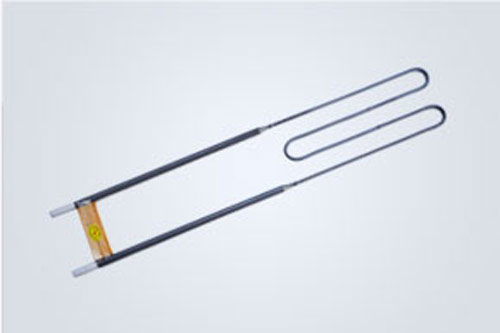
The hot zone needs enough space from furnace brick, insulation, fixtures, and the heated load. Contact or near-contact conditions can create local overheating and mechanical stress. The element should be positioned so it can radiate heat evenly without being forced into a crooked line to fit the bracket.
This is where shape selection becomes practical. Songshan offers U shape, W type, L type, round, spiral, M, and straight/X forms, allowing the furnace drawing to guide the choice. A geometry that fits the chamber cleanly is more useful than a familiar shape that creates tight clearances.
The cold ends and terminal area should remain away from unnecessary heat. If a connection point becomes too hot, the element may fail at a location that should have been protected. Supports and connectors should hold the element in position without pulling rigidly on the ceramic-like body.
During replacement, the installer should compare the old element's dimensions, support points, terminal space, and failure location. Matching the outline alone can repeat the original problem. A better replacement review asks whether the previous part was overloaded, poorly supported, contaminated, or exposed to an unsuitable atmosphere.
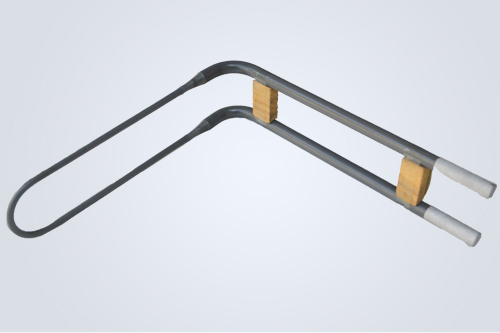
Operating discipline is the next major life-extension tool after installation. Gradual heating, sensible dwell periods, and a stable atmosphere reduce repeated stress on MoSi2 heating elements. A furnace does not need to be operated timidly, but it should be operated consistently.
Shutdown deserves the same attention. Abrupt cooling, frequent door opening, or uncontrolled venting can change the thermal and atmospheric conditions around the element. When the full cycle is managed as one system, the element is less likely to experience isolated shocks that accumulate over time.
Routine inspection should include the hot zone, holders, terminal connections, insulation, chamber cleanliness, and the position of the load. Signs such as a slower heat-up, uneven glow, or repeated trips near one setpoint may indicate a system problem rather than a single failed component.
This broader inspection also improves maintenance decisions. If the same failure appears repeatedly in one location, the cause may be spacing, support, contamination, or control behavior. Correcting that cause can protect the next element more effectively than simply installing a new one.
Songshan gives engineers a practical range of MoSi2 heating elements to compare by grade and shape. The MoSi2 heating elements category is useful for reviewing the available forms, while the furnace drawing and operating cycle determine which option is most sensible. That keeps selection connected to the actual chamber.
For a replacement or new furnace, the most useful information includes working temperature, atmosphere, chamber dimensions, element orientation, hot-zone position, terminal clearance, heating cycle, and the reason the previous element was removed.
MoSi2 heating elements deliver better service life when the element, atmosphere, furnace geometry, and operating schedule support one another. In oxidizing furnaces, that means controlled startup, clean chambers, stable loading, protected terminals, and a shape that fits the heat path. Songshan's range of MoSi2 grades and shapes gives engineers room to make that match carefully.
To connect a real furnace layout with a suitable element direction, grade, and shape, please contact Songshan.
A: The most common causes are thermal shock, rushed startup, contamination, uneven loading, poor clearance, and mechanical stress around the terminals. A furnace can still reach temperature while gradually damaging the element. Reviewing the chamber and complete operating cycle usually reveals more than inspecting the failed part alone.
A: Molybdenum disilicide can form a protective silica layer in a suitable oxidizing atmosphere, supporting high-temperature resistance heating. This makes MoSi2 useful in demanding furnace applications. The benefit still depends on stable operation, correct mounting, and an atmosphere that does not undermine the protective surface.
A: Yes. Startup combines rapid temperature change, expansion, and mechanical response. A gradual ramp gives the element and furnace structure time to stabilize. Rushing directly toward full output can create stress that is repeated every cycle and may lead to early breakage or uneven performance.
A: Songshan offers multiple MoSi2 grades and shapes, so a replacement can be matched to the furnace chamber instead of being copied by appearance alone. Providing the working conditions, dimensions, mounting direction, and failure symptoms helps make the replacement decision more technically useful.
© Henan Zhengzhou Songshan Enterprise Group Co., Ltd