

2026-10-15
SiC heating elements should be selected based on the furnace layout, electrical circuit, and operating cycle. For industrial users, the most reliable choice is the element that covers the working hot zone, matches the available voltage and resistance range, and can be inspected or replaced without redesigning the furnace. Songshan provides product options that can be reviewed against these practical conditions.
Choosing SiC heating elements starts with the furnace rather than the heater catalogue. The chamber width, height, loading method, and available terminal positions determine the useful hot-zone length and the shape that can be installed without disturbing the working space. A technically strong element still performs poorly when its heated section sits outside the load area or its cold ends are exposed to excessive heat.
The hot zone should cover the part of the chamber where products actually need heat. For a long furnace, an ED rod or another extended design may provide a practical installation route, while U, W, UX, or wide-U forms can help when terminals must remain on one side or when the furnace layout calls for a different heat path. The decision is mainly geometric: compare the active length, cold-end length, element spacing, and the distance from the load before selecting the shape.
The cold ends and terminal connections need a cooler, accessible zone for reliable electrical connection and inspection. If a terminal is positioned too close to the hot zone, heat can transfer into the connection area and make maintenance more difficult. During design review, mark the element centerline, hot zone, cold ends, and support points together instead of checking the rod length alone.
Voltage and resistance are closely linked to how evenly a SiC furnace heating system distributes electrical load. Songshan provides SiC heating elements in voltage ranges from 110 to 480 V, but the usable choice still depends on the furnace circuit, controller, transformer, and the resistance group required by the installation. A correct match helps keep the system controllable as the elements age.
Silicon carbide heating rods normally increase in resistance during service. That change affects the power available at a given voltage, so a furnace designed around a fixed starting value may gradually lose heating capacity if the control system has no adjustment range. A practical selection review therefore considers the initial resistance, the operating voltage, the number of elements, and how the controller will compensate over time.
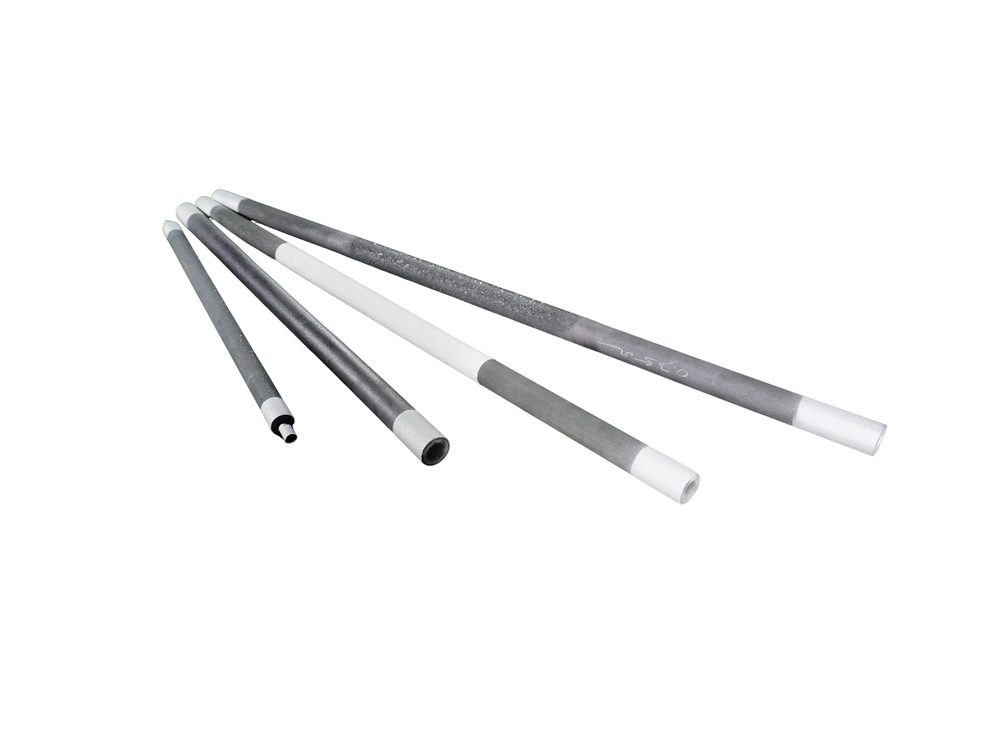
Elements used in the same circuit should be selected from compatible resistance groups. Songshan product information identifies a group resistance deviation of less than or equal to ±5%, which gives engineers a useful basis for planning balanced electrical loading. Matching does not replace temperature mapping, but it can reduce unnecessary differences between zones and make commissioning more predictable.
Shape should follow the furnace structure and the way heat must reach the load. ED rods are common for direct wall-to-wall or side-mounted arrangements, while U and W forms can support layouts where both terminals need to be accessible from one side. SC and SCR spiral designs are available for applications that require a different active geometry, and UX or wide-U forms can suit larger or more specialized chamber layouts.
Silicon carbide heating element replacement is easier when the original design record includes the element shape, diameter, hot-zone length, cold-end length, voltage, resistance, and terminal arrangement. Keep these details with furnace drawings and circuit information so a replacement can be checked against the installed system rather than ordered by appearance alone. In a multi-zone furnace, record the position of each element and the resistance trend at service intervals.
A single replacement may be reasonable when the remaining elements are relatively close in age and resistance. A wider replacement can be more appropriate when several rods have aged significantly, when the furnace shows uneven temperature, or when the installed set is no longer well matched. The choice should be based on electrical readings, temperature behavior, and the risk of creating a large difference between old and new elements.
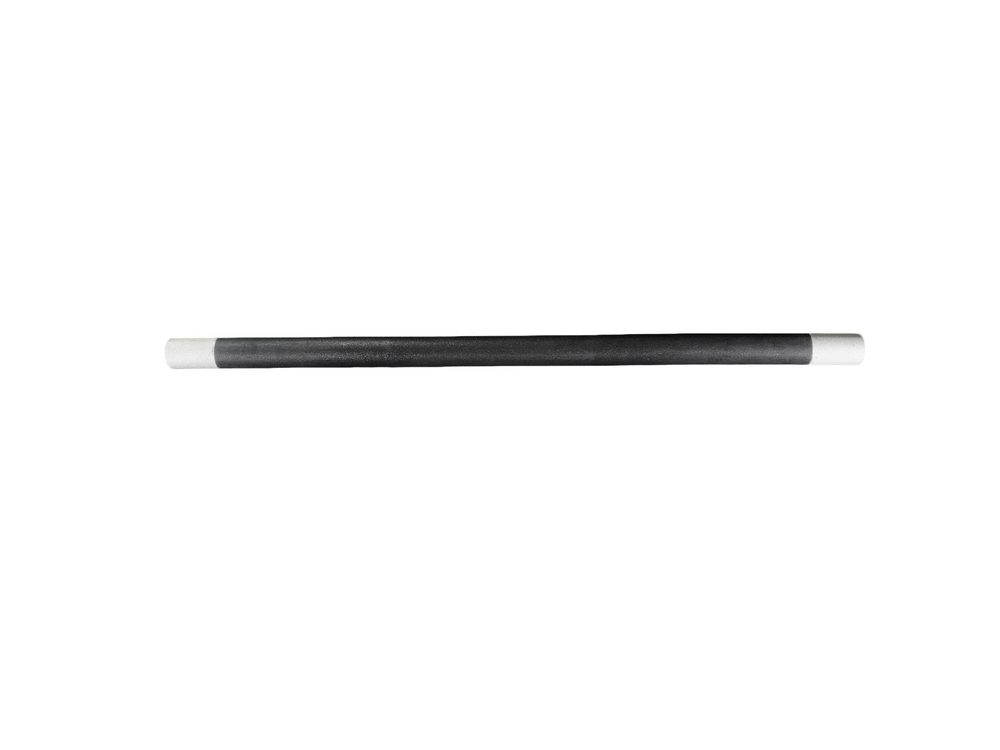
A new or long-idle furnace should be dried before full operation, and voltage should be increased gradually instead of applying maximum load immediately. This is particularly important when moisture, insulation changes, or a large temperature difference could create stress during startup. A controlled ramp gives operators time to observe current, resistance, temperature response, and any abnormal change before the furnace reaches its working condition.
Songshan SiC heating elements can be evaluated for ceramic, glass, electronic ceramic, magnetic material, and powder metallurgy furnaces when the heater geometry is reviewed together with the electrical circuit and service plan. The most useful specification is not a single parameter; it is the complete relationship between chamber dimensions, hot-zone coverage, voltage, resistance, atmosphere, and replacement access. That approach helps engineers select a SiC heater that is workable in the real furnace, not only on a product list.
The best SiC heating elements are matched to the furnace geometry, electrical system, and maintenance rhythm at the same time. By checking hot-zone length, cold-end placement, voltage, resistance grouping, and replacement access before installation, operators can build a more stable industrial furnace heating system and reduce avoidable service interruptions. Explore Songshan’s SiC heating element solutions for a design discussion based on your furnace layout.
A: Start with the furnace drawing and confirm the chamber dimensions, active heating length, terminal position, operating voltage, element count, and required resistance. Then compare suitable shapes such as ED, U, W, UX, SC, or SCR designs. The selected element should cover the load zone while keeping terminals accessible and outside excessive heat.
A: Silicon carbide elements naturally change during high-temperature service, and their resistance generally rises as they age. At the same voltage, that change can reduce available power. A controller or transformer with adjustment capacity can help compensate, while regular electrical readings show whether the installed set remains suitable for the furnace circuit.
A: A full-set replacement is worth considering when several elements have aged, resistance differences have widened, temperature uniformity has declined, or new and old rods would be poorly matched. If the remaining elements are stable and close in condition, a single replacement may be practical. Check electrical readings and furnace temperature behavior before deciding.
A: Compact furnaces often need a shape that fits the chamber while keeping terminals clear of the hot zone. U, W, UX, or wide-U forms may be useful depending on the available installation space, but the correct choice depends on hot-zone length, cold-end dimensions, support points, and circuit arrangement. A drawing-based review is more reliable than selecting by shape name alone.
© Henan Zhengzhou Songshan Enterprise Group Co., Ltd