

For the most demanding high-temperature applications industrial plants require specialized heating components that deliver performance, quality and value. When heating elements for high-temperature ovens and furnaces experience premature failure, process downtime and severe damage to other components can result, leading to lost production and reduced profitability. That is why choosing high-temperature heating elements that deliver excellent performance at critical high-temperature levels while maintaining component life is essential to controlling costs and maximizing plant throughput.
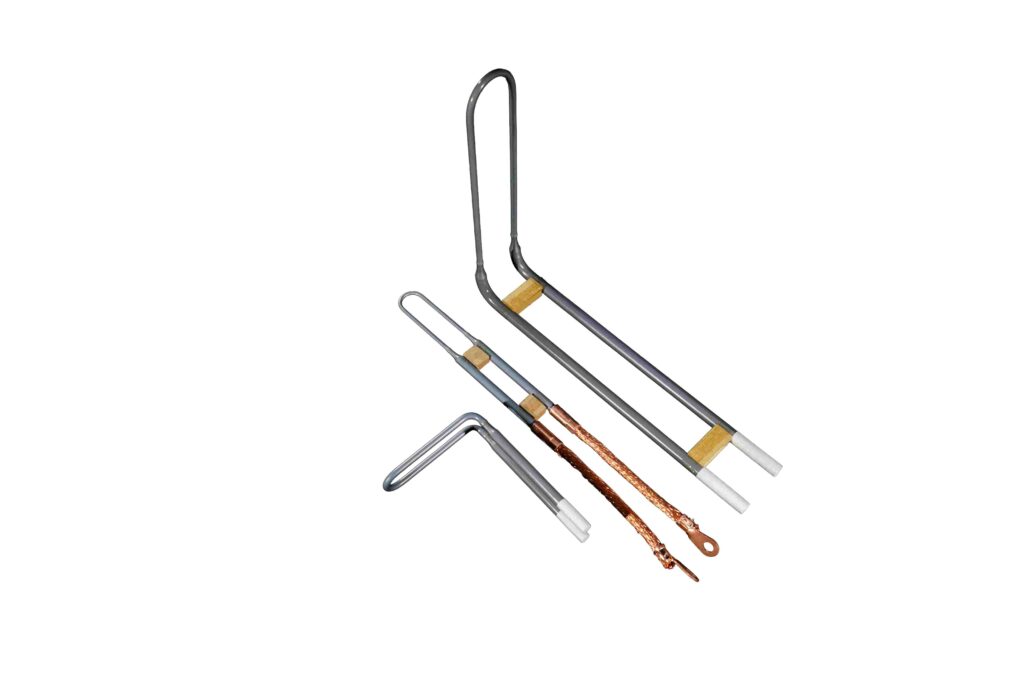
For over 40 years Songshan has been alleviating the pain of industry with our range of high quality SiC and MoSi2 heating elements. With some of the world’s most advanced manufacturing facilities, Songshan heating elements are designed and made to rigorous standards. Songshan SiC heating rods offer exceptional durability and accuracy for high-temperature applications, and our MoSi2 heating elements provide unrivalled reliability in the most demanding environments, including self healing in static overload. Songshan is one of the world’s leading heating element manufacturers, bringing the very latest in technology to every application.
To enhance your heat setup, one needs to grasp the basic principles of the heating parts. The main options for intense heat uses are Silicon Carbide (SiC) and Molybdenum Disilicide (MoSi2).
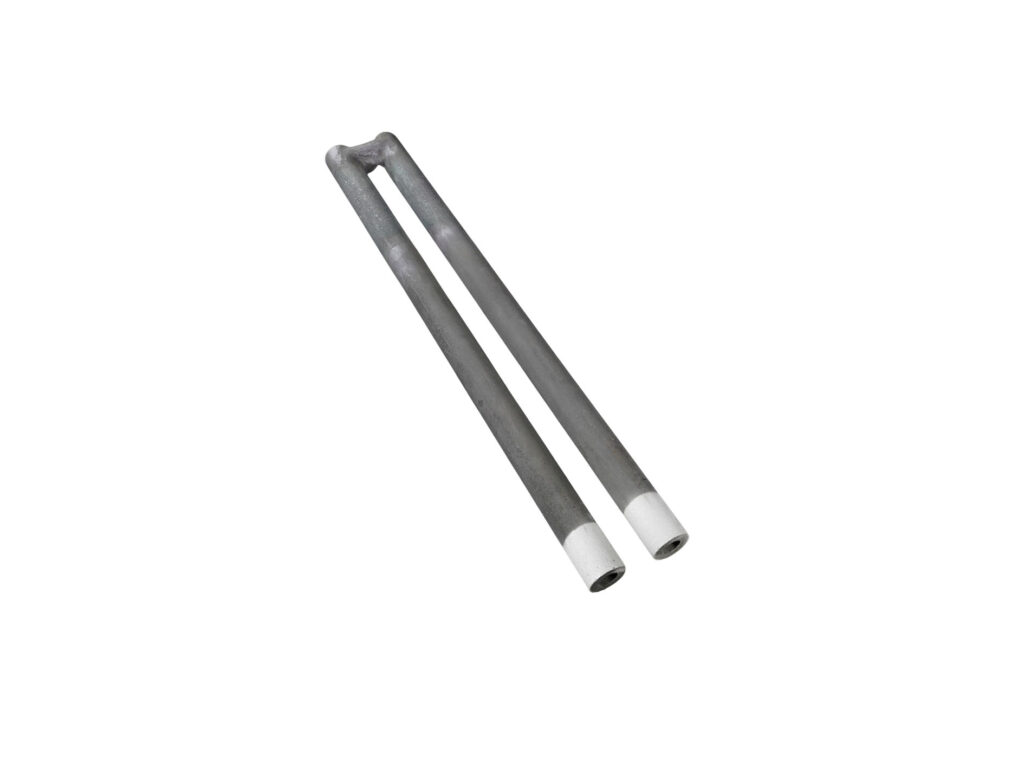
The high-efficiency silicon carbide heating rod is a non-metallic component made from carefully chosen top-grade green silicon carbide. At Songshan, we silicify and re-crystallize these elements at an impressive 2200°C. This method forms a sturdy "bridging" framework among SiC grains. As a result, it offers strong mechanical durability and even electrical flow.
What distinguishes the Songshan Silca from typical benchmarks like SiC heater high temperature silicon carbide rods is our creative approach to cold-end design. We adjust the resistance balance between the hot section and the cold end. Consequently, our high-efficiency silicon carbide heating rod focuses warmth accurately inside the oven space. This cuts down on power loss and avoids excessive heat harm to the oven structure.
If your procedure demands heat beyond 1500°C, the MoSi2 heating element for extreme high temperatures stands as the preferred choice. Built on molybdenum disilicide, these resistance-based parts employ a "self-healing" process. In an oxidizing setting, intense heat burning creates a dense quartz glass (SiO₂) layer on the exterior. This shields the core from additional oxidation. Thus, the MoSi2 heating element for extreme high temperatures functions dependably at levels up to 1800°C.
Grasping the compromises between these substances proves vital for picking the suitable option for your task.
The most notable contrast appears in the way these substances deteriorate. A high-efficiency silicon carbide heating rod inevitably wears out gradually. Its resistance rises steadily as the inner SiC crystals interact with oxygen to produce SiO₂. On the other hand, MoSi2 heating elements for extremely high-temperature items show minimal wear. Their resistance stays steady regardless of usage duration. This permits combining aged and fresh parts in one setup, offering a clear upkeep benefit.
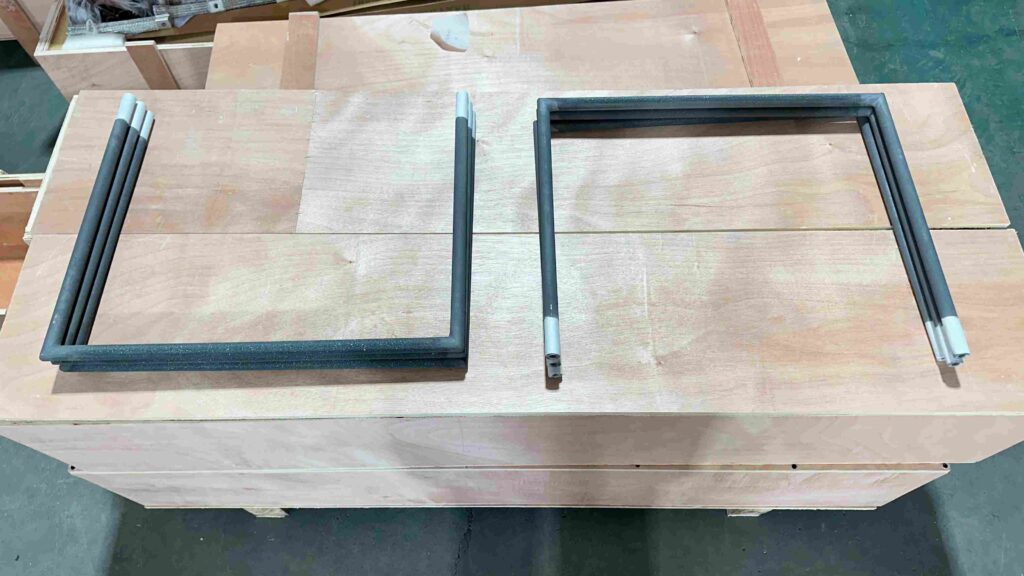
Melting aluminum calls for a steady 800°C oven setting. At such levels, employing a high-efficiency silicon carbide heating rod delivers superior heat emission. Engineering estimates indicate that with a rod exterior at 1200°C, a Songshan SiC rod supports a surface load of 17 W/cm². Moreover, by applying a voltage-control transformer with double-voltage capacity, staff can sustain steady power output. Even as the rods wear, this ensures uniform melting results.
For advanced ceramic firing or lab trials above 1700°C, the MoSi2 heating element for extreme high temperatures excels without rival. It preserves shape stability over 1700°C. Songshan's work on blended materials with added strengthening grains boosts this further. Such enhancements avoid the drooping or stretching common in lesser-grade parts.
If your work requires the sturdy, power-efficient output of a high-efficiency silicon carbide heating rod or the intense heat capacity of a MoSi2 heating element for extreme high temperatures, Songshan supplies the technical prowess needed for achievement. Selecting parts aligned with SiC heater high temperature silicon carbide rods standards, and advancing them via 2200°C re-crystallization plus erosion-resistant layers, safeguards your efficiency and finances.
Elevate your thermal processing today. Reach out to Songshan for expert advice. Learn how our exact heating parts can refine your industrial oven output.
A: It is generally considered to be at the end of its service life when its electrical resistance increases to four times its initial value.
A: Yes. Because the resistance of MoSi2 heating elements is independent of their service time and they do not age significantly, mixed use is permissible.
A: This is low-temperature oxidation powderization that occurs between 400-700°C. To prevent this, you should quickly pass through this temperature range during start-up.
A: It uses a specialized production process to create a superior resistance ratio between the hot and cold zones, keeping heat in the furnace and protecting the outer shell.
A: Aging is caused by the slow reaction of SiC with oxygen at high temperatures, which forms a SiO₂ film that gradually increases electrical resistance.
© Henan Zhengzhou Songshan Enterprise Group Co., Ltd