

Molybdenum disilicide (MoSi₂) is a refractory ceramic material that combines metallic and ceramic properties, making it ideal for extreme temperature applications. Its unique structure allows it to maintain strength and conductivity even at elevated temperatures. MoSi₂ heating element is a kind of resistance heating element basically made of high pure MoSi. This composition provides excellent oxidation resistance due to the formation of a silica (SiO₂) layer on its surface when exposed to high temperatures.
The protective SiO₂ film acts as a self-healing barrier, preventing further oxidation and degradation. In oxidizing atmosphere, a layer of compact quartz protective film is formed on the surface of MoSi₂ element owing to the high-temperature combustion, which prevent MoSi₂ from continuously oxidizing. This feature ensures durability and reliability in oxidizing environments such as air or industrial furnace atmospheres.
MoSi₂ heating elements exhibit stable electrical resistance across a wide temperature range, ensuring predictable performance during operation. The resistivity of element rapidly rises along with the temperature rises, under normal operating conditions, generally the element resistance doesn't change with the application time changing. This stability allows both new and used elements to operate together without significant performance differences.
Thermally, MoSi₂ has high conductivity which ensures uniform heat distribution throughout the furnace chamber. Its ability to maintain performance under repeated heating and cooling cycles makes it particularly valuable for continuous industrial processes where thermal cycling is frequent.
One of the most notable advantages of MoSi₂ heating elements is their exceptional temperature tolerance. In oxidizing atmosphere, its max temperature can reach 1800°C, and its applicable temperature is 500~1700°C. This makes them suitable for applications requiring precise control at extremely high temperatures such as sintering or annealing processes.
Additionally, MoSi₂ elements are resistant to thermal shock caused by rapid temperature changes. Their ceramic-like brittleness at room temperature transitions into plasticity when heated, allowing them to withstand fast heating or cooling cycles without damage.
The oxidation resistance of moly disilicide heating elements stems from their ability to form a self-healing silica film during use. When the element temperature is higher than 1700°C, the SiO₂ protective film will be fused because its fusing point is 1710°C and the SiO₂ is fused into molten drops owing to the action of its surface extension, which cause losing its protective ability. In the oxidizing atmosphere, when the element is continuously used, the protective film forms again. This regeneration process ensures long-term protection against corrosion even after temporary exposure to extreme heat conditions.
Such characteristics enable consistent performance in both air and controlled atmospheres like nitrogen or argon environments while extending operational lifespan compared with traditional metallic heating elements.
Moly disilicide’s high electrical efficiency reduces overall energy consumption during furnace operation. The long service life minimizes maintenance costs and replacement frequency. The combination of these factors results in lower total cost of ownership over time. Furthermore, stable performance contributes directly to consistent product quality—an essential factor in precision manufacturing sectors such as ceramics or metallurgy.
In ceramic production, moly disilicide heating elements deliver uniform heat distribution necessary for sintering, glazing, and annealing processes. Their clean operation minimizes contamination risk compared with metal-based heaters. It can be widely used in such applications as sintering and heat treatment of ceramics, magnet, glass, metallurgy, refractory, etc. The precise temperature control achievable with these elements ensures consistent product quality across production batches.
MoSi₂ heating elements are extensively used in metallurgical furnaces for processing steel, titanium, and other advanced alloys. Songshan MS17: Most types of industrial furnace for heat treatment, forging, sintering, glass melting and refining and for use in radiant tubes. Their high-temperature stability supports critical operations like brazing or tempering that demand clean atmospheres free from contamination by metallic vapors.
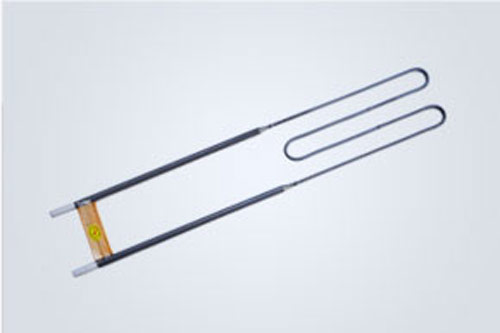
Laboratory-scale furnaces rely on MoSi₂ heating elements for experiments requiring precise thermal conditions such as crystal growth or materials testing. Songshan MS18: Laboratory furnaces, testing equipment and high temperature sintering production furnace. Their predictable electrical behavior ensures reproducibility—vital for research environments where accuracy defines results.
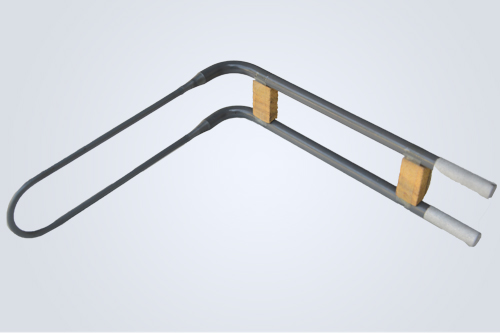
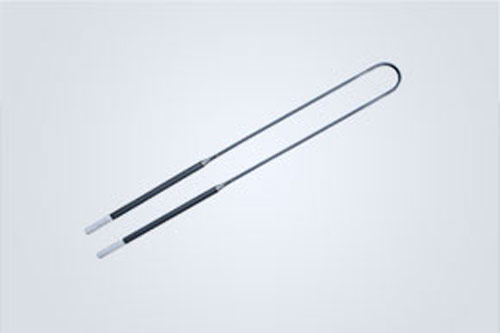
U-shaped moly disilicide heating elements are widely used due to their balanced heat distribution across furnace chambers. They are typically suspended vertically from holders to minimize mechanical stress on hot zones during operation.
Straight rod configurations are ideal for compact furnaces or localized heating zones where space constraints require simplified installation geometry.
Proper installation practices are critical to ensure longevity of MoSi₂ heating elements. Under normal temperature, MoSi₂ element is very brittle, while under high temperature it is plasticity. Therefore vertical hanging installation using dedicated holders prevents mechanical stress fractures at cold ends. Electrical insulation must be maintained carefully to avoid short circuits or overheating issues during prolonged use.
Regular inspection helps detect wear early while maintaining consistent electrical contact through aluminum braid connecting straps that link each element safely within power circuits.
The recent development is concentrated towards increasing the resistance against oxidation by using composite coatings that can increase surface stability during long exposure to reactive gases. The improved technology allows for producing denser microstructure, which results in a more uniform current distribution in each heating element of MoSi₂.
Contemporary industrial furnaces are increasingly being fitted with sensors for measuring real-time temperatures and automatically making adjustments according to process needs. These systems help increase energy efficiency by varying the input power as per demand and hence become more efficient with MoSi₂ technology.
Energy-efficient characteristics make moly disilicide heaters an environmentally responsible choice for industries seeking carbon reduction targets. Less power consumption and increased life span help decrease waste produced due to constant replacement of parts—thus supporting sustainable manufacturing efforts worldwide.
MoSi₂ heating elements represent one of the most advanced solutions available for high-temperature industrial applications today. Their combination of thermal stability, oxidation resistance, energy efficiency, and adaptability across diverse industries underscores their technological superiority over conventional alternatives.
For expert consultation or custom furnace solutions using Songshan MoSi heating technology—contact us today.
A: Songshan’s MoSi₂ heating elements are manufactured using high-purity materials under ISO9001-certified quality systems ensuring superior consistency and performance stability even at 1800°C continuous operation levels.
A: Their lifespan depends on operating environment but due to self-healing SiO₂ layers they typically last significantly longer than metal-based heaters—often several thousand hours under standard oxidizing conditions.
A: Yes—they perform effectively in nitrogen or argon atmospheres though maximum operating temperatures may slightly reduce compared with air; still maintaining excellent efficiency up to around 1700°C depending on grade type.
A: Industries including ceramics manufacturing, metallurgy processing, glass refining, semiconductor fabrication, and advanced material research gain substantial benefits due to precise control capabilities combined with energy-efficient performance characteristics inherent in Songshan’s MoSi₂ solutions.
© Henan Zhengzhou Songshan Enterprise Group Co., Ltd